
The Henryton Road Bridge Replacement Project in Marriottsville, MD, involved the complete removal and replacement of a 90+ year old bridge that was in poor condition and did not meet current design and safety standards despite being critical to the residents who live near it and relied upon it every day to access their communities
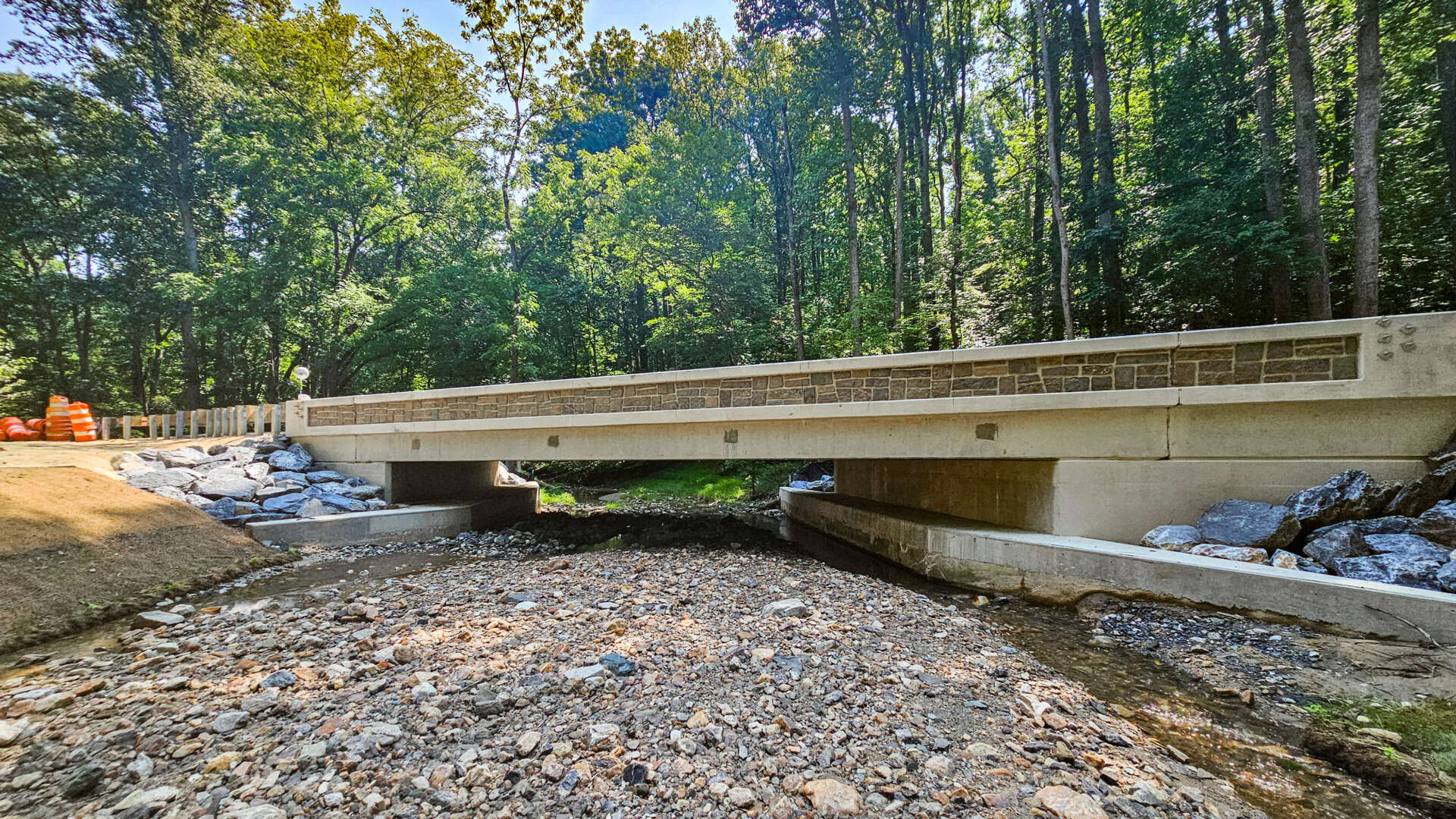
The new bridge provides significant safety improvements, increased roadway width, and a context-sensitive design with aesthetic enhancements. In addition, the bridge replacement project and its success were recognized with top honors at the Maryland Quality Initiative’s (MdQI) Annual Awards of Excellence, winning “Project of the Year” for Projects Costing less than $5 Million and MdQI’s County Engineers Association of Maryland’s Modal Award.
[JPG, 432.63 KB]
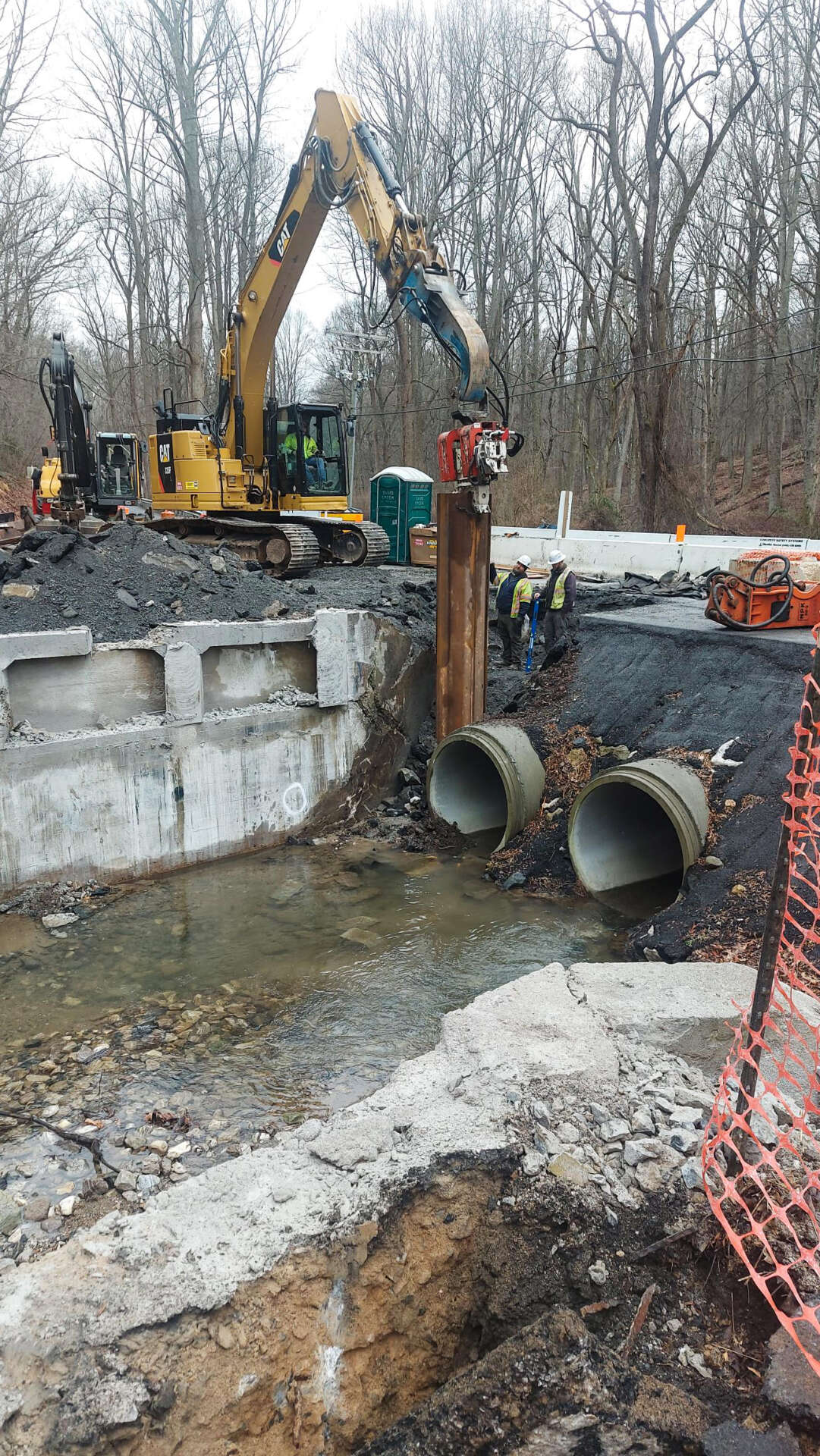
Bypass road emergency culvert repairs at the twin reinforced concrete pipes.Through all the stages and moving parts of this complex project, Project Manager Jacob Weir, PE has been directly involved, serving as an on-site consultant for the Howard County Department of Public Works (DPW) since 2022 as part of RK&K’s bridge replacement on-call contract.
“When asked to step into this role, I didn’t know what to expect, but after a brief acclimation period and support from Howard County DPW staff, I was able to use my technical knowledge and experience gained leading structural work at RK&K and effectively apply it to this new role to provide overall project management services for their bridge design and inspection program.”
[JPG, 301.76 KB]
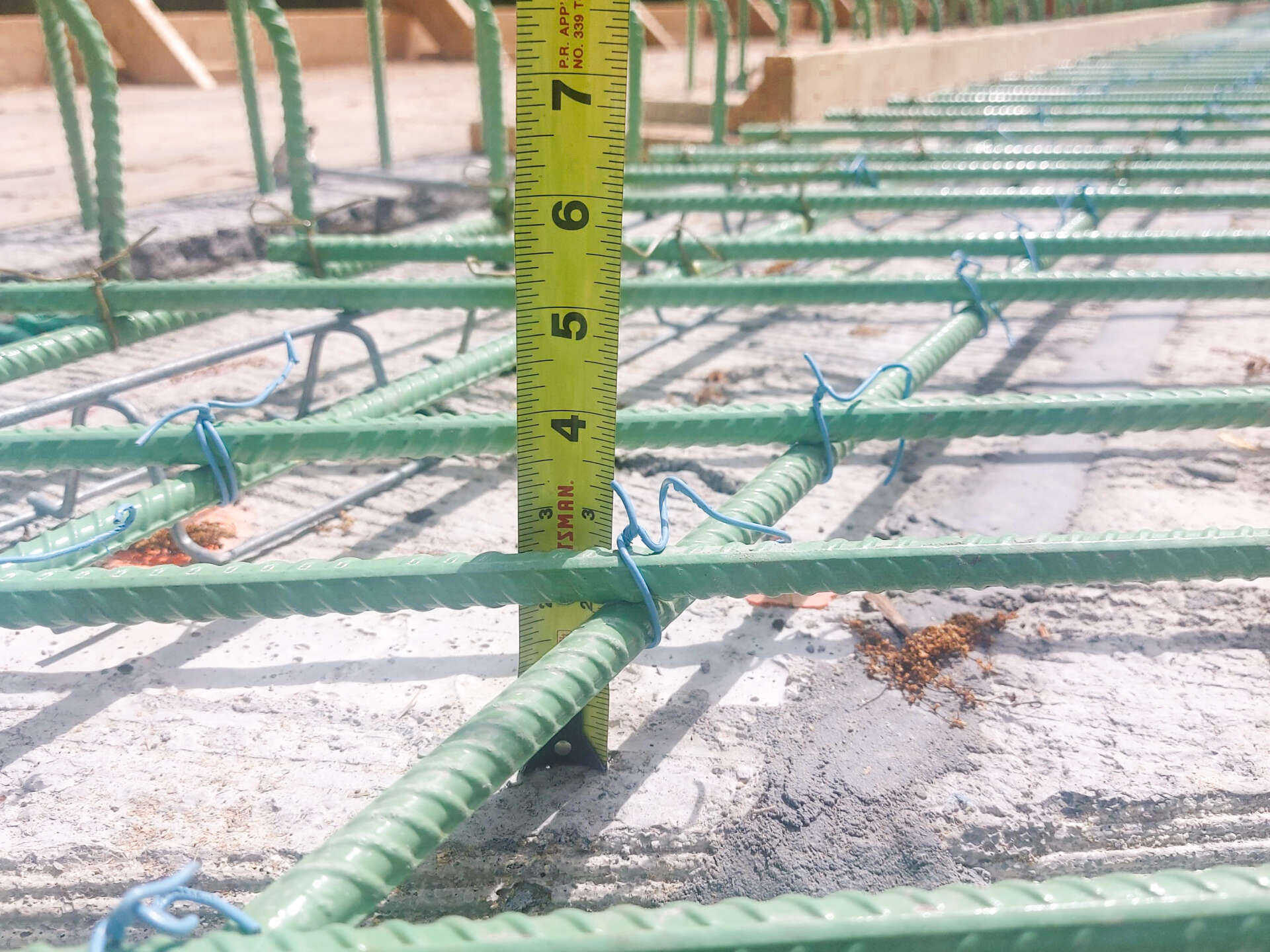
The crew checking the reinforcement cover in preparation for the concrete deck pour.Jacob’s responsibilities as an on-site consultant included overall management of over a dozen Capital bridge projects in various phases of design and construction, as well as Howard County’s structure inspection program, emergency structure reconstruction program, and systematic structure improvement program. On any given day, Jacob could be found performing structure inspections for County owned small bridges and culverts as an NBIS certified Team Leader, responding to structural related inquiries from the public, performing reviews of inspection reports, reviewing contract documents and proposals, coordinating with MDOT SHA, design consultants, utility owners, and other stakeholders on various County bridge projects, performing public outreach, securing permits and property easements, preparing project specifications and other documents, reviewing consultant structural designs, and assisting with the development of annual fiscal budget for the County bridge program.
“The key objectives for this bridge were to eliminate the 90-plus-year-old deficient bridge, remove the existing 12-ton load posting, approve functionality and safety by widening the existing bridge, increasing the hydraulic capacity, and providing enhanced safety features with traffic barriers that meet current design standards.”
He added that the team also wanted to minimize future maintenance and minimize or mitigate impacts to both the site and the surrounding communities.
[JPG, 422.54 KB]
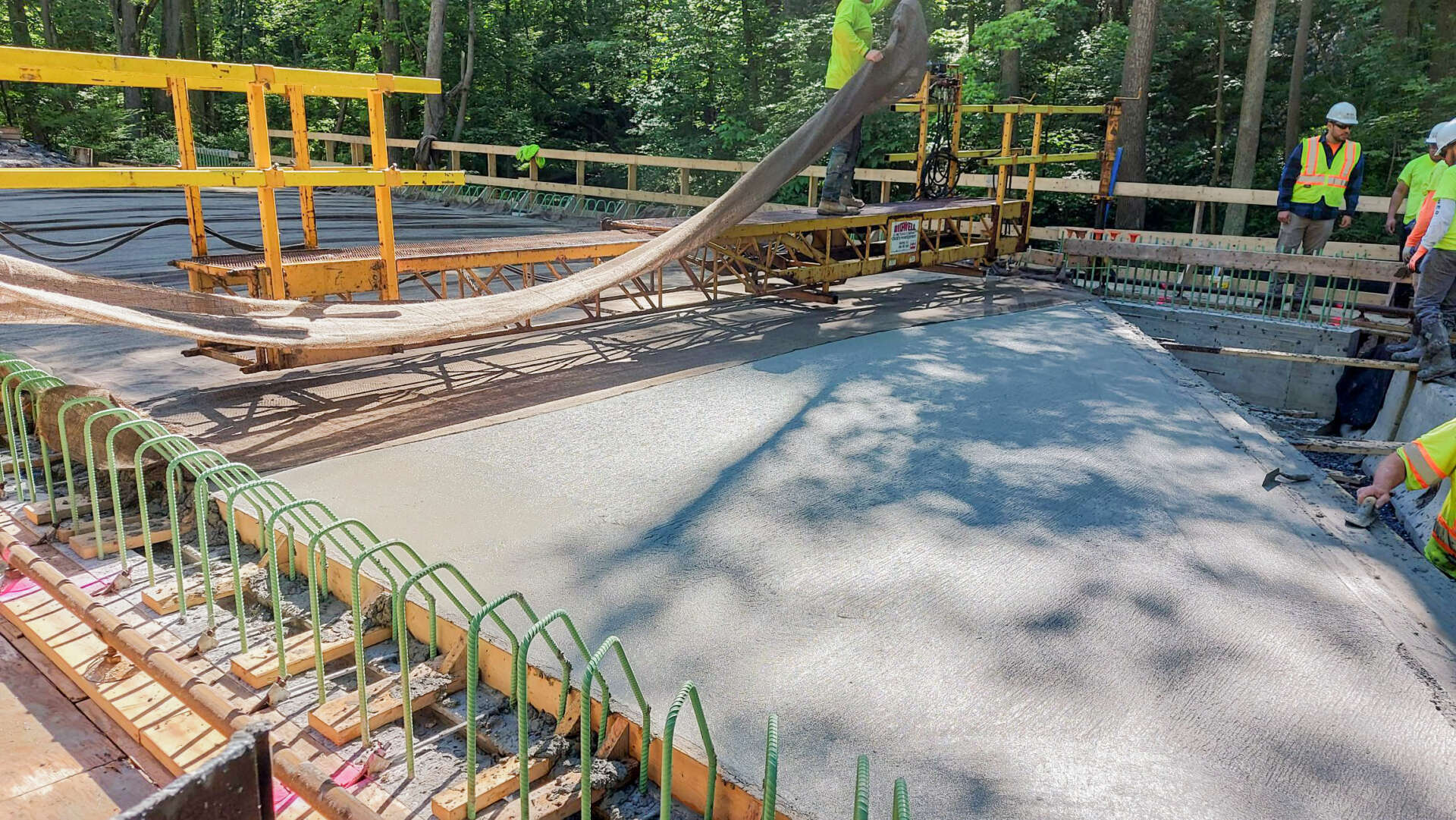
The freshly poured concrete bridge deck overlay.“The replacement of this bridge posed several unique challenges. First, about a mile north of the bridge, Henryton Road dead-ends at the Patapsco River, which is the border between Howard and Carroll Counties. There are some communities north of the bridge that rely on this structure to access the rest of Howard County. It’s basically the only way out of their communities,” he said.
Because of this, it was essential to maintain through-traffic at all times during construction since closing the roadway was not an option.
An innovative Maintenance of Traffic (MOT) solution was used for the project that included a temporary bypass roadway and a temporary traffic signal. This consisted of utilizing an existing haul road located adjacent to the upstream side of the bridge and incorporating enhancements such as widening and strengthening the existing asphalt pavement, installing a temporary barrier along each side, and alignment improvements to allow for larger tractor-trailers and construction vehicles to traverse the access road more safely during construction. In addition, the MOT design included temporary signals at each approach to always maintain one lane of traffic on the bypass road.
[JPG, 503.77 KB]
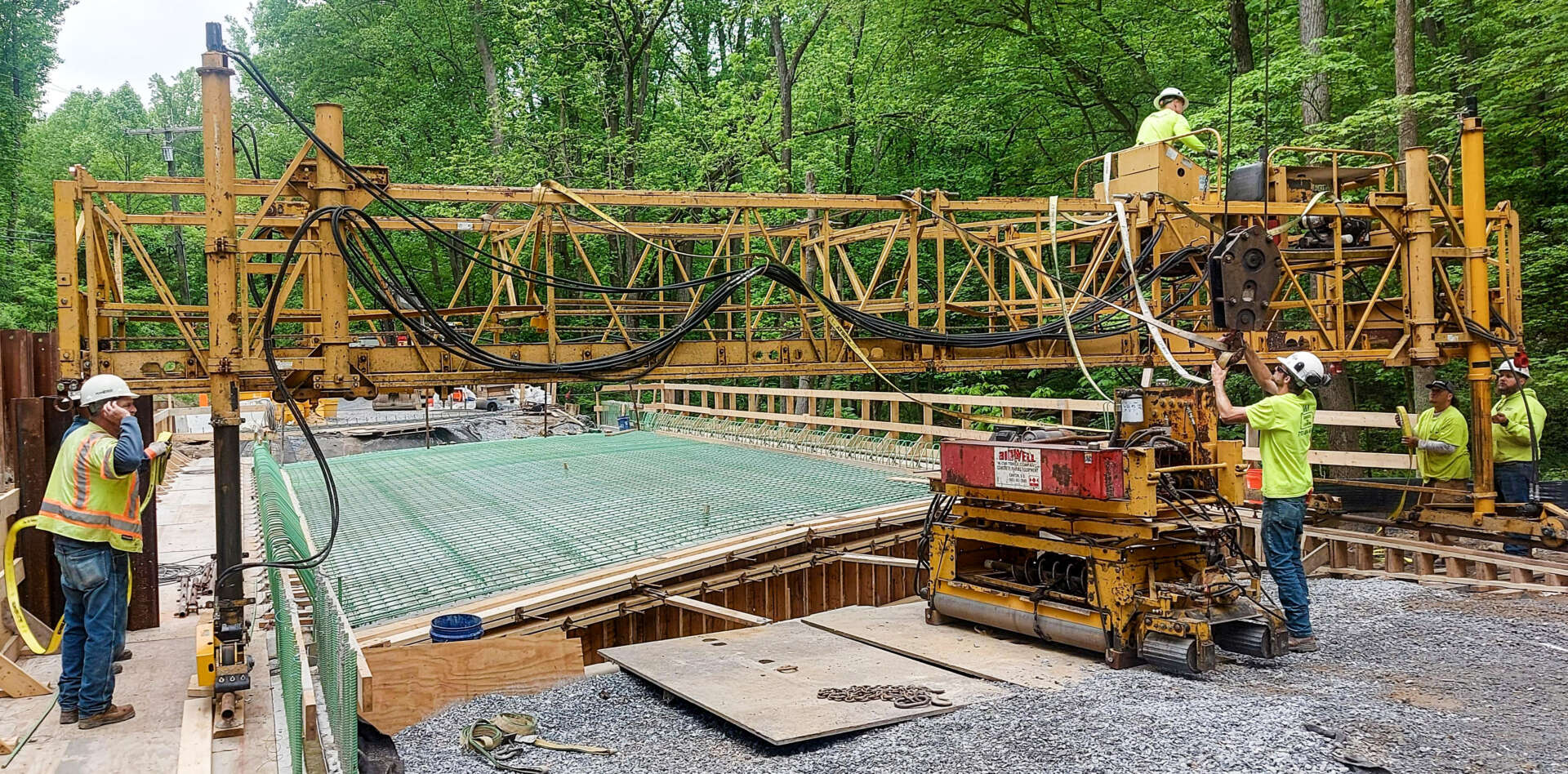
Prepping screed for the concrete bridge deck pour.Jacob adds, “The existing bypass road originally contained a single corrugated metal pipe culvert constructed at an unknown date, and at that time, there were no existing plans or details that the county had on record for us to use. There were no H&H studies, no permanent information at all on the existing pipe that was installed.”
The original bypass road was likely installed by a developer during the construction of one of the first housing communities located north of the bridge. At this time, the bridge was already in poor condition with a weight restriction that prohibited construction vehicles from crossing. The bypass road was constructed to allow for heavy equipment access north of the bridge.
The bypass road had experienced several cases where emergency repairs had to be performed because the existing culvert pipes were undersized, which led to frequent washouts. Following the first washout in 2016, the culvert was replaced with two twin 48-inch reinforced concrete pipes.
“However, these solutions were temporary and not intended to be a permanent structure because they did not convey the current design storm without flooding.”
The bypass road suffered washouts again in 2018, and in 2020, it was not able to meet the current hydraulic capacity, further necessitating a replacement bridge structure. The most recent washout occurred in January 2021, which required another round of emergency repairs. This time, the washed-out culvert structure was replaced with twin 60” diameter reinforced concrete piles with concrete headwall and wingwalls. The repairs were completed with subsequent permits obtained through MDE. The structure was still classified as “temporary” by MDE with the expectation that the bypass road would be permanently removed following replacement of the adjacent bridge.
To address these concerns, the County’s objectives, and the limitations of the site, the replacement bridge’s design focused on multiple innovative approaches that allowed for expedited construction, enhanced resiliency, and reduction of the overall project footprint.
[JPG, 544.49 KB]
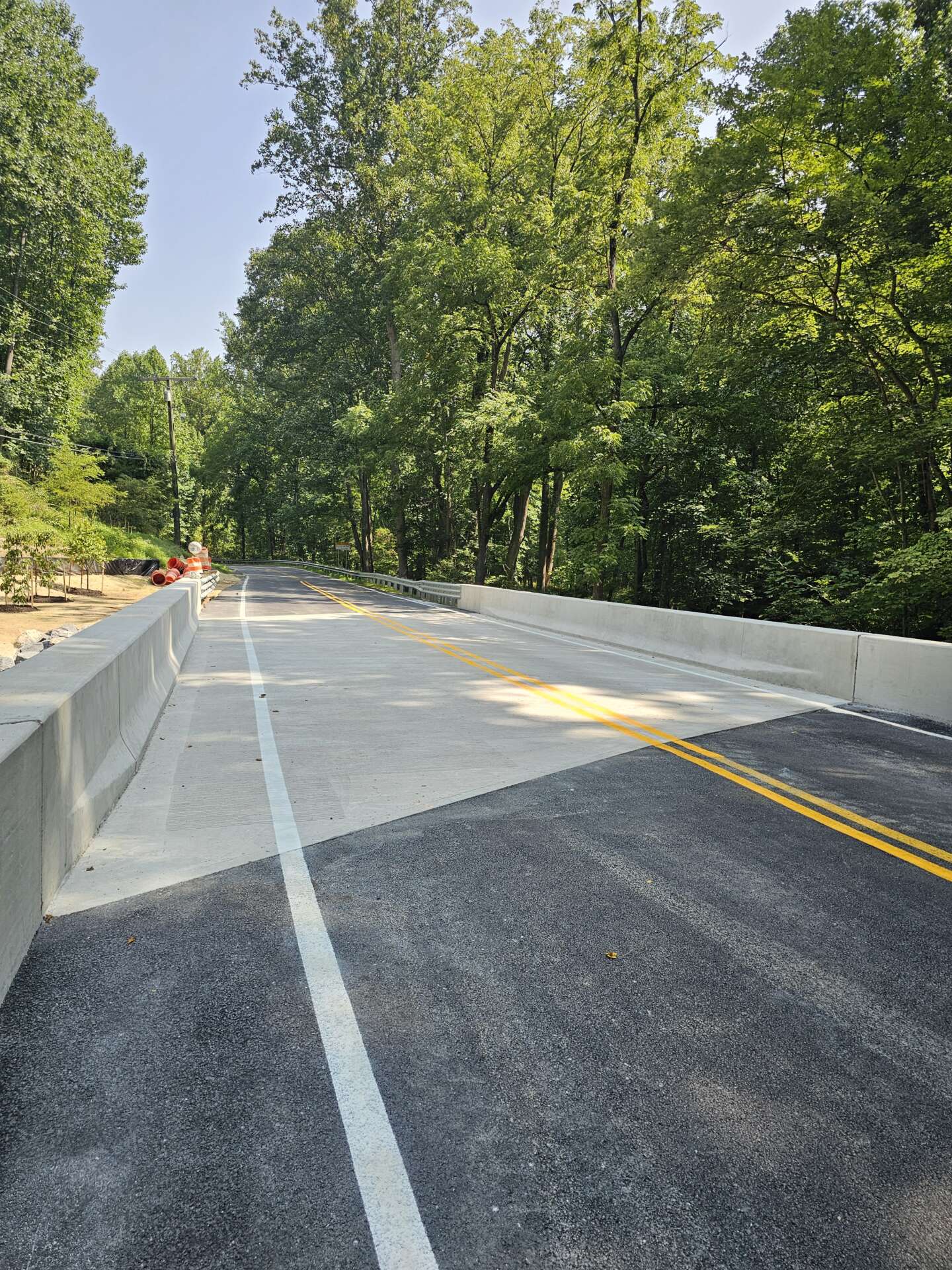
The finished concrete bridge deck and parapetsThe County integrated several innovative approaches to minimize the construction duration, including the use of Prefabricated Bridge Elements. Prestressed concrete adjacent slab beams were utilized for the new superstructure and served as the primary formwork for the concrete overlay wearing surface. As a result, the County was able to quickly erect the superstructure and minimize the time associated with forming and pouring a traditional concrete deck. The precast elements were erected in just one day, after which post-tensioned lateral ties were installed, joints were grouted, and the structure was quickly ready for placement of the parapets and overlay material.
Another aspect of the design that allowed for expedited construction techniques was that the proposed abutments were placed behind the existing abutments, leaving the old abutment mostly intact for scour protection, maintenance of stream flow, and to reduce the overall amount of excavation. During construction, following the partial removal of the old abutment to the required elevation, the contractor discovered a conflict between the old abutment and one of the drilled caissons for the new abutment. Jacob worked collaboratively with the contractor and the design consultant to develop an acceptable solution in the field that included the careful removal of an additional portion of the old abutment to permit the installation of the drilled caissons without major design change or significant project delays.
Cost-saving strategies were implemented for this project, including utilizing the Federal Highway Administration’s Bridge Replacement and Rehabilitation Program, which entailed securing a federal funding contribution to get the bridge constructed for the County. Due to age, functional obsolescence, and overall poor structural condition, the replacement of this structure was a good candidate for federal aid funding. Jacob worked with the design consultant and MDOT SHA Office of Structures to navigate the “FHWA Bridge Program – Guidelines for Local Governments” document, which provides stringent procedural and documentation requirements at various project milestones to ensure the approval and disbursement of federal funds under this program.
I am very pleased with our team’s ability to execute the replacement of the Henryton Road bridge successfully and, at the same time, preserve the scenic characteristics of the roadway. Quality infrastructure and safety are paramount in thriving communities.Daniel Davis, Bureau Chief of DPW, Bureau of Engineering
This funding mechanism allowed the County to take advantage of an 80/20 split (federal/local) of the overall construction cost, saving the County over $1,000,000 that could be used to fund other critical infrastructure projects. All federal funding requirements were administered through the Maryland State Highway Administration. The use of federal funds required the project to satisfy all National Environmental Protection Act (NEPA) requirements. By focusing on minimizing environmental impacts, the County was able to secure a Programmatic Categorical Exclusion (PCE) for the project, which greatly streamlined the approval process.
Jacob adds that another component of his role was maintaining a robust public engagement plan, which consisted of several public meetings to inform the residents in these communities north of the bridge of the impact they should expect. In-person meetings were conducted at a nearby elementary school to present the project objectives and potential impacts, as well as answer questions. The team coordinated with the local school board for potential impacts to bus routes and emergency responders to ensure there was no disruption of access for communities north of the bridge.
In preparation for the public engagement meetings, Jacob prepared resident letters that were mailed out to all homeowners in the surrounding communities, installed public meeting notification signs at the bridge site, and created a project informational brochure for distribution at the public meetings. Jacob attended the meetings as a representative of Howard County to provide an overview of the project and answer questions.
As a consultant, Jacob’s job was to manage all these pieces of the project, serving as a connection between multiple teams and disciplines to ensure the new bridge was built correctly while meeting all the County’s objectives.
[JPG, 543.98 KB]
The finished Henryton Road bridge profile showing its aesthetic barrier“You’re always doing a little bit here and there. You’re communicating and coordinating with different entities, whether it be utilities, permitting, design consultants, local residents, whatever it may be, and you’re managing multiple projects at once in different phases of construction or design.”
Jacob said managing this project for Howard County gave him the opportunity to learn more about the federal funding process, how to coordinate with multiple stakeholders, and handle documentation, reviews, and public outreach. He said this experience and this role helped broaden his project management skills and showcased the importance of relationship-building on such an intricate project.
“I got to learn about all the different disciplines and stakeholders involved in work like this, and how we must interact collaboratively for everything to come together to produce a successful project, including what goes into securing all the necessary approvals to meet the federal funding requirements for the project.”
Initially, he admits, he didn’t know what to expect when accepting this project management opportunity with the County but ultimately found it to be a highly rewarding experience that really helped him develop his project management skills.
“The Henryton Road bridge replacement project is a great example of this because it required me to step outside my comfort zone and put on my client hat to effectively manage the execution of an entire project, not just the structural portion I am most familiar with. This was challenging because it required a lot of coordination with various entities, multitasking, and responsiveness to achieve. I am proud to have served a key role on this award-winning project and am grateful for all the great relationships I’ve developed during my tenure as an on-site consultant with Howard County. The fact that my role has led to several additional structural design and inspection tasks for RK&K over the past few years shows how pleased the County is with the work we do and how valuable staff augmentation can be for RK&K.”