
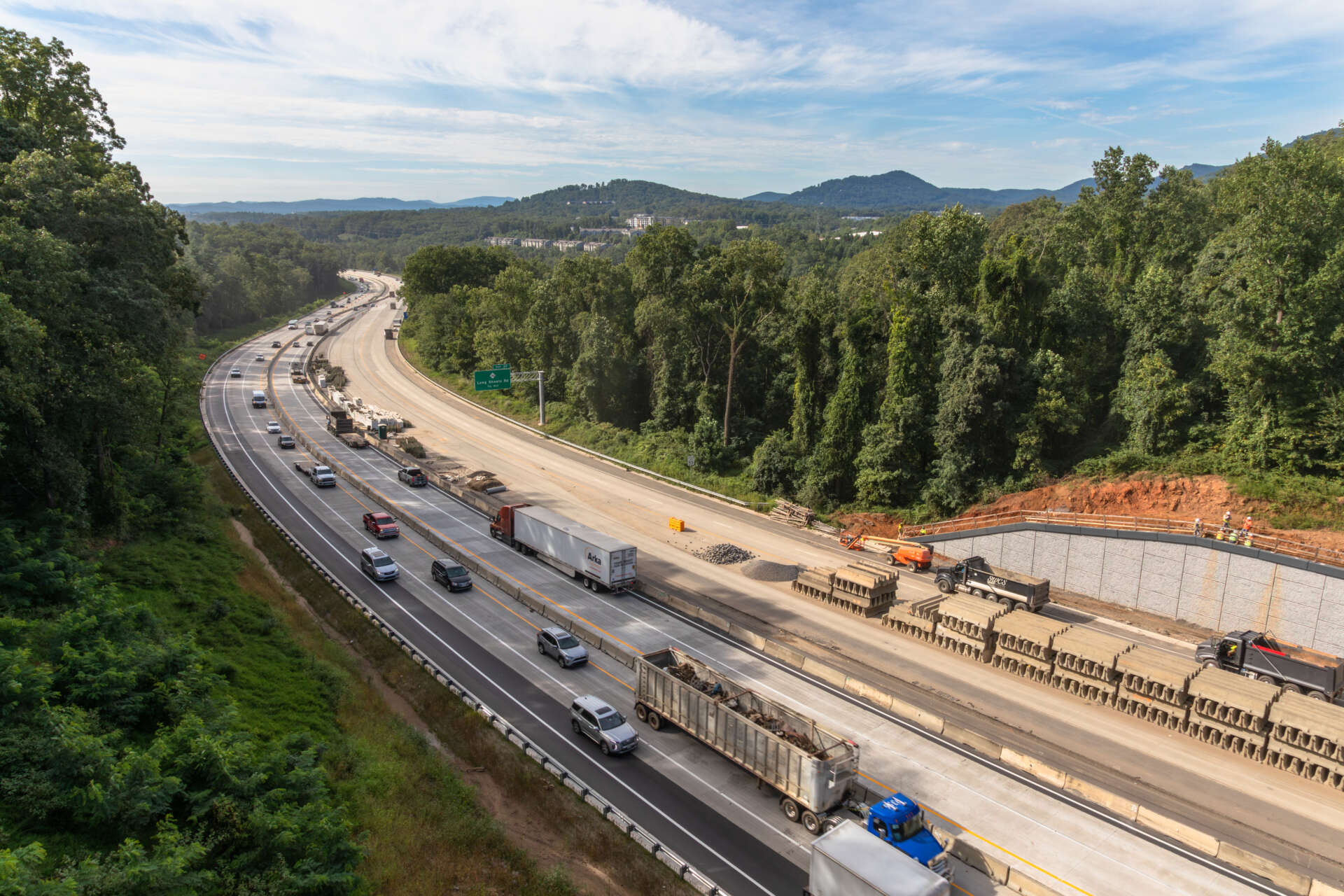
The $1.2 billion I-26 Asheville Connector project is the largest design-build project in the North Carolina Department of Transportation’s (NCDOT) history. This monumental project in Northwest Asheville provides major improvements to existing I-26 and local roadways from Haywood Road to Broadway Street while providing direct access for the interstate across the French Broad River. A major component of this project is that it removes interstate traffic completely from Patton Avenue. Currently, Patton Avenue is a highly congested major gateway into Asheville, with many businesses and residential areas. Separating interstate from local traffic greatly enhances the safety of the entire facility.
Partnering with NCDOT since we opened our North Carolina doors in 1964, RK&K is proud to be a part of this piece of the Department’s history. Executive Director Mike Merritt, PE
Serving as the Lead Designer on this project, RK&K is providing comprehensive multi disciplinary design-build (DB) services focused on enhancing mobility, safety, and operational performance through the expansion of I-26/I-240 and improvements to key urban corridors.
[JPG, 342.53 KB]
The I‑26 Connector is a median‑divided freeway with interchange-only access that will link I‑26 in southwest Asheville to U.S. 19/23/70 in northwest Asheville.In addition to overall design management and integration, our team is providing roadway, structural, geotechnical, environmental, traffic, utilities, hydraulics, and hydrology design services, along with extensive right-of-way utility relocation coordination.
To help support the design team, RK&K has brought on eight subconsultants. These companies are assisting RK&K with most of the design and coordination required to complete the project.
This complex design-build project encompasses 3.2 miles of improvements within an existing, highly constrained corridor and includes widening the roadway to three lanes in each direction with open shoulders and a divided median. The design incorporates three interchanges, eight at grade intersections, one roundabout, and 17 bridges, including major structures spanning active railroads and the French Broad River, which runs through the center of the project area. These elements require careful coordination, constructability focused solutions, and close collaboration with the contractor, NCDOT, the City of Asheville, utility companies, and numerous other project stakeholders.
[JPG, 1.05 MB]
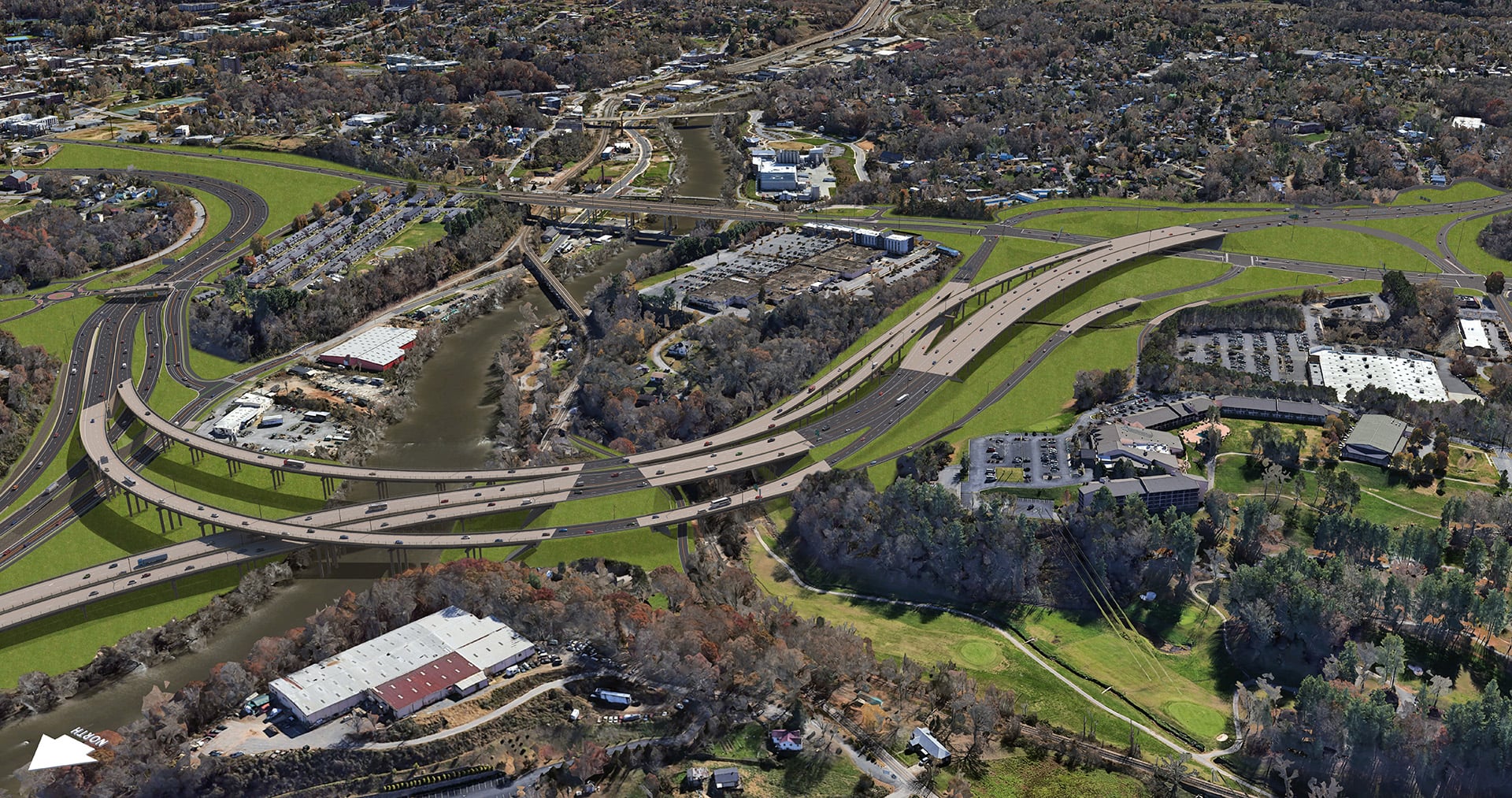
RK&K’s Graphics team created renderings of the Connector for use during public workshops to educate stakeholders, gather critical feedback, and actively listen to community concerns.Another big facet of this project is the required complex utility coordination. The team is working with the City of Asheville and the Metropolitan Sewerage District (MSD) to design their facilities within this expansive project corridor. In addition to these conflict areas, we are also providing design for multiple betterments throughout the corridor.
Prior to being awarded this project, the design team faced uncertainty and major procurement challenges that first had to be overcome, added Mike.
After more than two years of design, it’s very exciting to finally see materials, equipment, and big iron in place as construction begins. Executive Director Mike Merritt, PE
With initial disappointment by not only NCDOT, but also by our team, all bids received for the project greatly exceeded the programmed funding amount to be awarded. To address this gap in funding, NCDOT required all shortlisted teams to propose a Best and Final Offer (BAFO). After the BAFO bids were received, all the bids were still too high and did not meet the requirements for project award.
Finally, in a last-ditch effort to award the project, NCDOT issued a new RFQ detailing a required six-month Optimization and Refinement (O&R) period for purposes of reducing cost to the shortlisted teams. Once again, these proposals were resubmitted by all the shortlisted teams and rescored, and finally, the RK&K team was declared the winner, and a contract was awarded for the project.
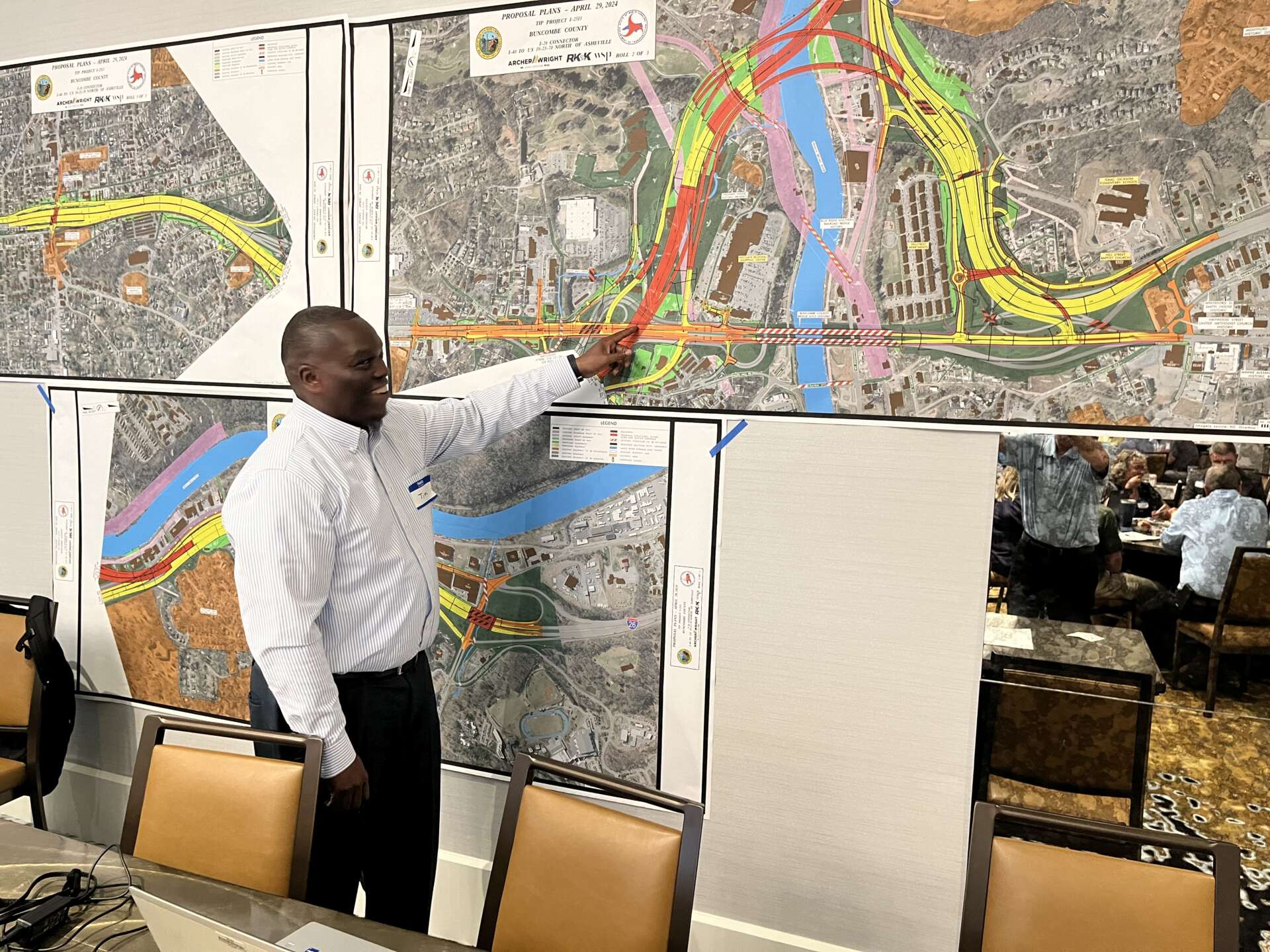
[JPG, 389.16 KB]
The team assembled a design charrette between NCDOT design groups, the contractor, RK&K, and NCDOT construction groups to discuss ways to reduce costs to the project.“The next 6 months were hectic to say the least. Yes, we had a contract, but the total contract amount had to be reduced for a full award for final design and construction. The magnitude of the funding shortfall required significant scope changes, reductions, and modifications to the design. These changes could not be reasonably achieved through the standard BAFO process alone; therefore, the O&R process was necessary to identify cost-saving opportunities while maintaining project objectives and commitments,” said Mike.
The (O&R) process provided flexibility for continued design innovation, allowing the project team to explore improvements and efficiencies without impacting the overall project schedule. Throughout the O&R process, the project team remained committed to maintaining the separation of I-26 and Patton Avenue traffic, preserving all pedestrian and cyclist connections, and adhering to all commitments outlined in the Final Environmental Impact Statement (FEIS) and Record of Decision (ROD).
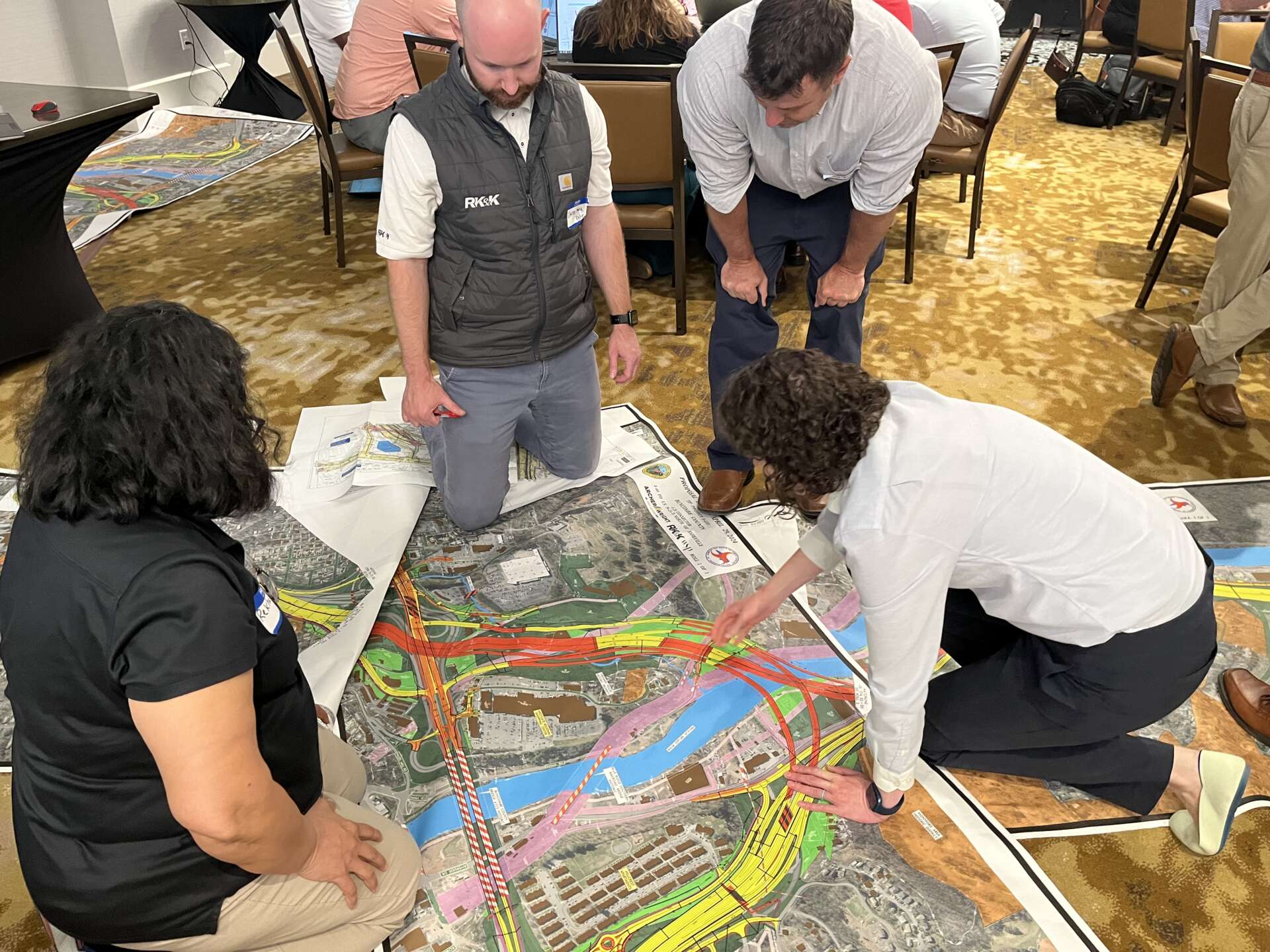
[JPG, 338.65 KB]
The charrette prioritized solutions based on potential cost savings, time savings, and impact to the project.The Optimization and Refinement (O&R) process included extensive collaboration and coordination, including a major brainstorming charrette attended by more than 100 multi-disciplinary team members and Department staff to refine the project. This all-hands approach resulted in significant financial benefits for the project, including $124 million in O&R savings and an additional $92 million in reduced engineering and contingency costs through an 8% reduction. Combined with $275 million in additional funding secured through the State Transportation Improvement Program (STIP), these efforts successfully addressed the project’s funding shortfall. As a result, a supplemental agreement was executed in January 2025, allowing the project to continue moving forward.
This is a great project—and even greater people to work alongside. I cannot wait to attend the ribbon-cutting! Executive Director Mike Merritt, PE
All changes developed through the O&R process were closely coordinated with the Federal Highway Administration (FHWA) to ensure continued environmental compliance. The refinements maintained the project’s original purpose and need while reducing overall impacts. As a result of these modifications, a NEPA Re-Evaluation was required and has been completed along with other essential designs to move ahead with construction.
In April 2026, the team celebrated the groundbreaking of the project. The I-26 Connector is on track to be completed in 2031.