
When winter arrives in the Appalachian region, finding a safe place to survive the cold can be a matter of life and death for bats. For threatened and endangered species already facing dramatic population declines, having a protected place to hibernate is especially critical.
That’s where a new artificial bat hibernaculum in Greene County, Pennsylvania, comes in. Developed for CNX Resources Corporation (CNX), the innovative structure was created to provide critical winter habitat for Appalachian bats and support ongoing regional conservation efforts. RK&K’s Environmental team played a key role in bringing the project to life, providing environmental and engineering services as part of a multidisciplinary partnership that brought together agency and conservation expertise with engineering, design, fabrication, and construction capabilities.
[JPG, 235.60 KB]
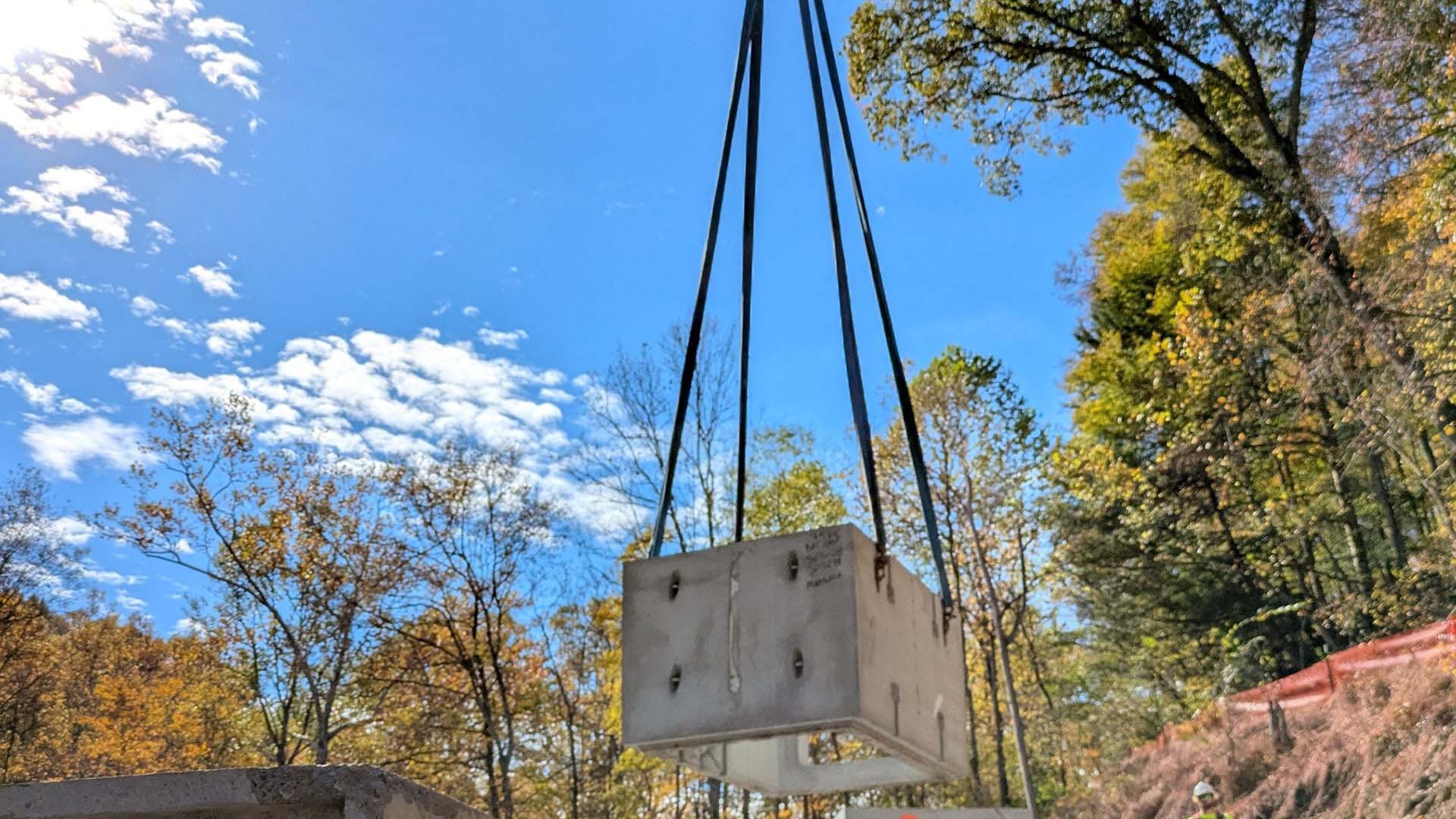
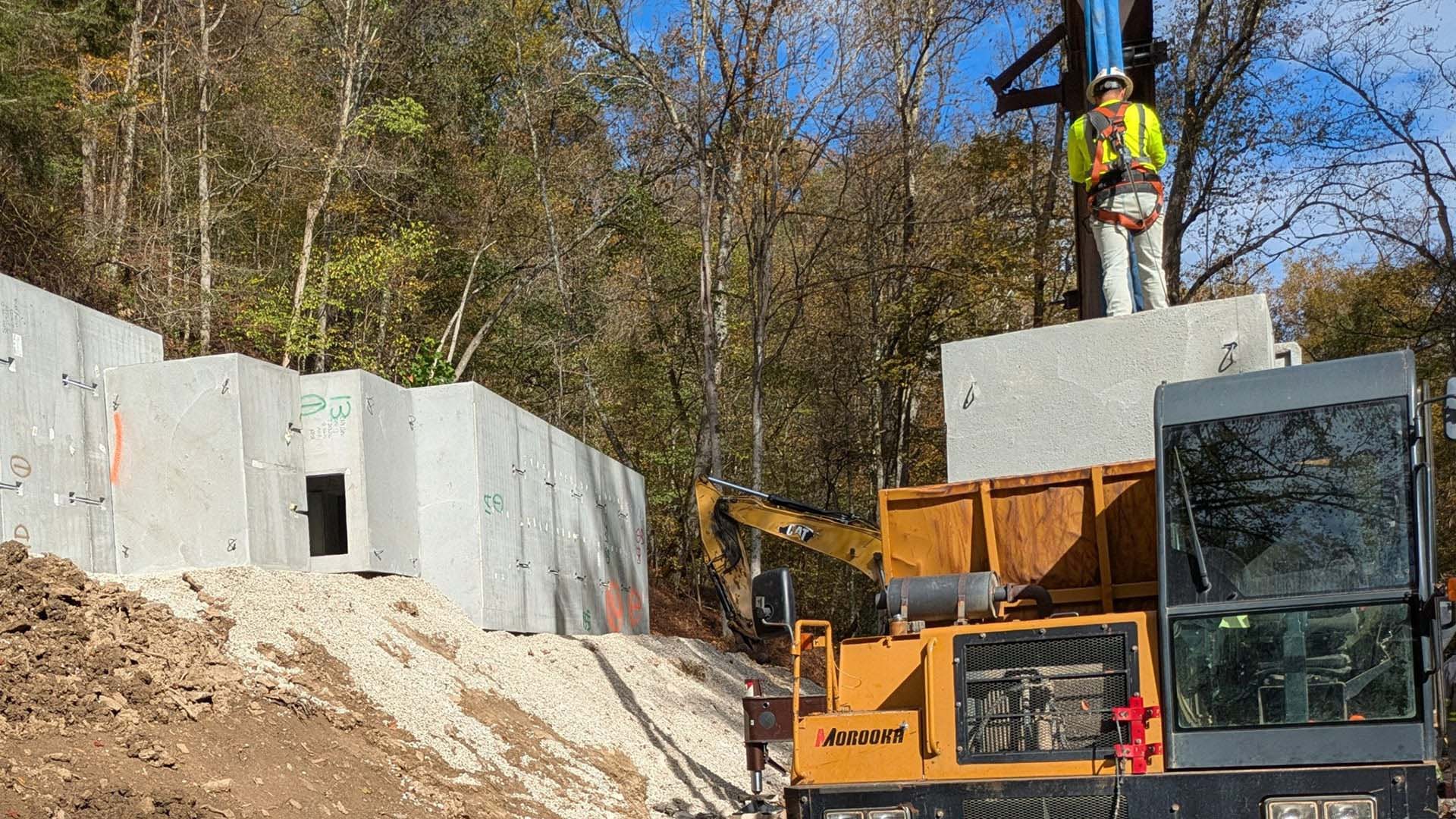
A crane offloading sections after delivery from staging area.Project Manager Dan Weaver, PE explains that a hibernaculum is a safe, specialized structure that provides animals with shelter from harsh winter temperatures and predators. For CNX Resources Corporation (CNX), creating this protected habitat was an important opportunity to support and protect local bat species.
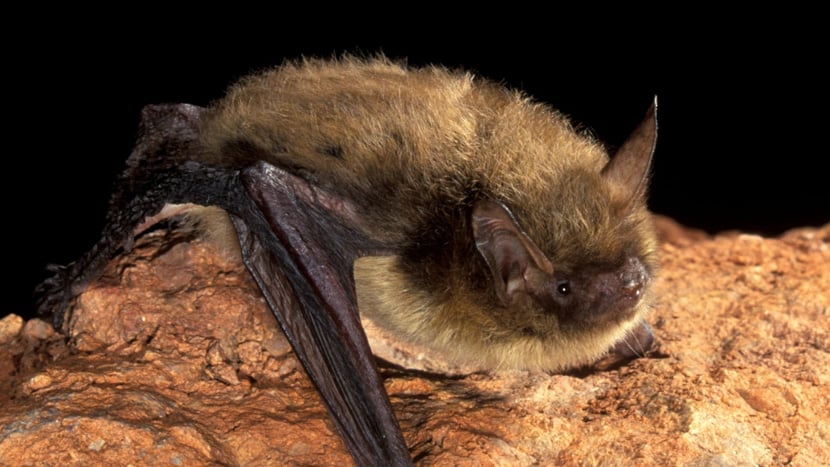
CNX Resources Corporation is a natural gas company with extensive operations in the Appalachian Basin, including Pennsylvania, Ohio, and West Virginia. In addition to its energy operations, CNX has established a strong stewardship focus on Appalachian bats, a group that has experienced significant population impacts from White-nose Syndrome, a fatal fungal disease that infects hibernating bats in North America.
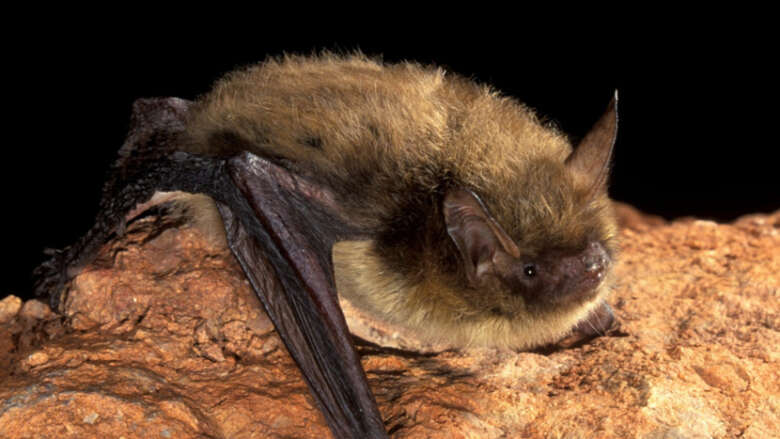
The disease began affecting bats in North America in 2007 and has resulted in millions of bat deaths, contributing to T&E protections for several species.
[JPG, 141.88 KB]
Appalachian bats have experienced significant population impacts from the deadly White-nose Syndrome.To address this, CNX’s conservation efforts have included cave-cooling projects, bat houses, public stewardship, education, and partnerships intended to improve habitat and support regional bat populations.
Our team had a prior working relationship with CNX and discussions around bat hibernacula facilitated a new Master Services Agreement with the client.
The selected site for the new hibernaculum is located on gated CNX-owned property along Wharton Run in the County, right on the PA and West Virginia border.
The area is characterized by a steep valley, high rocky cliffs, mature trees, and an existing gravel switchback road.
“The natural near-vertical slope was particularly well suited to placement of a hibernaculum structure, while the existing road provided a means to access the site,” said Dan.
Mature trees and an open flight path along Wharton Run also supported the habitat objectives. Site selection was further informed by passive acoustic monitoring conducted by CNX and its research and conservation partners to evaluate bat activity, species distribution, behavior, and population trends.
Our team’s design was developed around both general bat habitat needs and the specific environmental conditions required for an artificial hibernaculum.
[JPG, 359.33 KB]
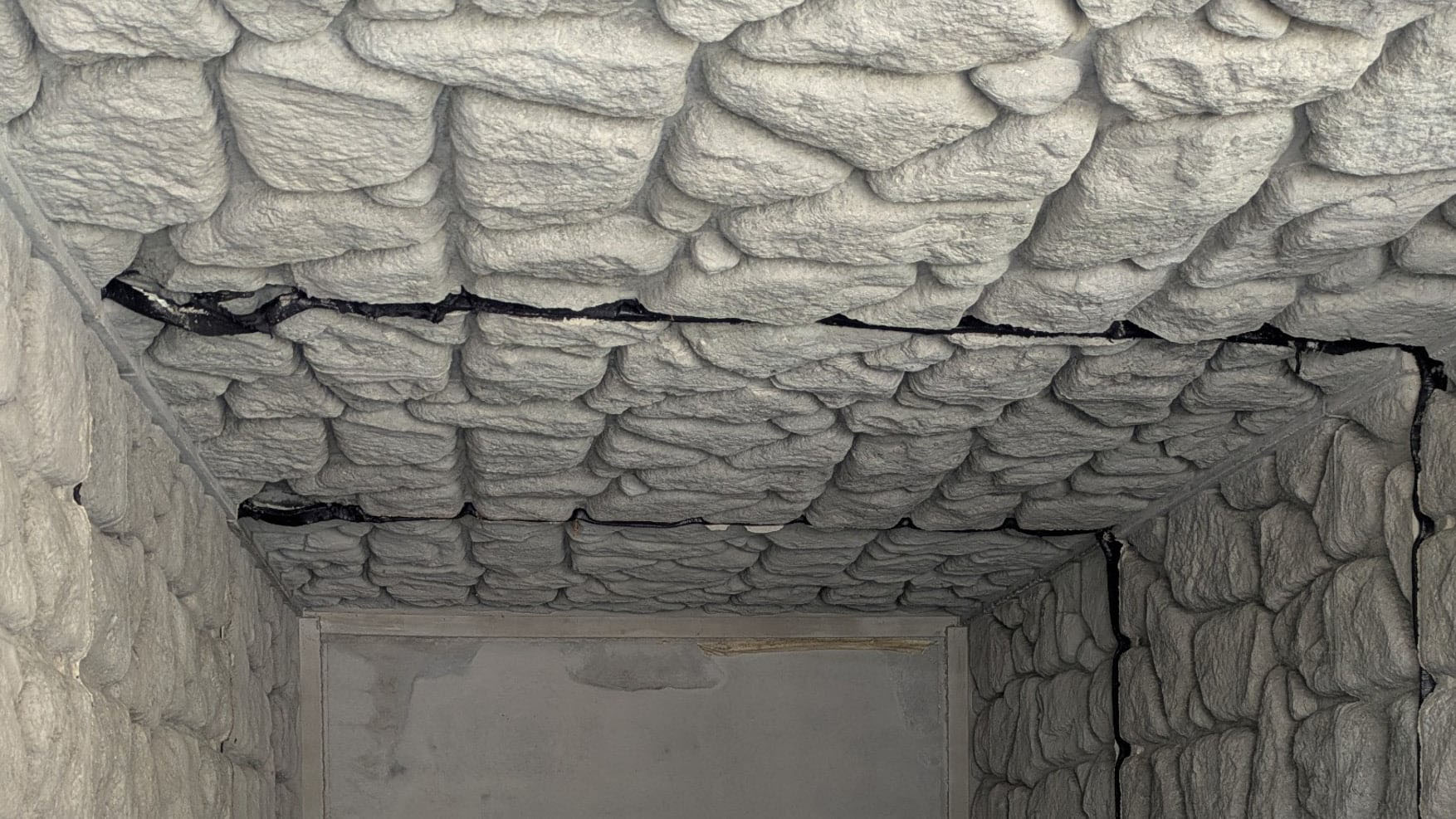
The hibernacula chamber being pieced together on site.General habitat considerations included suitable roosting opportunities such as large, mature, or cavity-bearing trees, abundant insect food sources, safe flight corridors, fresh water, and minimal human disturbance. Within the hibernaculum itself, the project team considered year-round temperature control, winter cold-air introduction, cool summer conditions, internal airflow and venting, and temperature gradients.
Fresh flowing water and water retention were also incorporated to maintain high humidity, while the design also needed to prevent flooding during heavy rainfall. Rough interior surfaces and crevices provide bats with surfaces they can grip and areas they can climb into.
The initial concept envisioned multiple pre-cast interlocking structures approximately 60 feet long with an internal cross-section of approximately 12 feet by 12 feet. The project team faced several significant constraints: a total budget of less than $1 million for design, materials, and construction, a remote location with limited access for delivery, storage, and construction; concerns about the safety of field-constructed structures; and concerns regarding the overall size of the proposed facility.
To address the project constraints, the team evaluated a pre-cast construction approach rather than relying on a structure constructed primarily in the field. Structure cross-sections were limited so multiple components could be transported to the site on tractor-trailer loads. Standard pre-cast components with pre-engineered load ratings were selected to avoid the added cost and complexity associated with custom structural components. Materials could be offloaded at an available staging area and transported to the construction location as needed. A large overhead stationary crane was used to provide access to the various areas of the hibernaculum site and facilitate placement of the pre-cast components.
Coordination for permitting began in the early stages of the project with both the Pennsylvania Department of Environmental Protection (PA DEP) and the Greene County Conservation District. Coordination also occurred with the Pennsylvania Department of Conservation and Natural Resources (PA DCNR), Pennsylvania Fish and Boat Commission, Pennsylvania Game Commission, and the U.S. Fish and Wildlife Service to clear multiple Pennsylvania Natural Diversity Inventory (PNDI) hits in the project area.
[JPG, 301.56 KB]
View looking up at the bottom sections of the chamber.The project was ultimately submitted through Greene County for a National Pollutant Discharge Elimination System (NPDES) permit and a PA General Permit-8 for a temporary bridge crossing along the access road to the site, as well as a General Permit-7 for the final upgrades to a ford crossing along the access road to provide post-construction access.
After all comments from the Conservation District were addressed, the project received the necessary permits in July 2025, with construction slated to begin later that year.
Pre-cast components were fabricated off site before being transported to the project area. The use of controlled off-site fabrication provided a consistent manufacturing environment while reducing the amount of structural construction required in the remote field setting. Once delivered, the components were positioned and assembled using heavy equipment and crane operations.
“The completed facility is more than a conventional concrete structure, its internal and external features were developed to provide a suitable environment for bats,” said Dan.
The design incorporates the environmental characteristics of natural hibernacula while using durable pre-cast construction methods. Temperature, airflow, humidity, water, and internal surface conditions were all considered as part of the habitat design. The ability to create different temperature conditions within the structure is particularly important because bats require appropriate conditions throughout the year. Water management was also a key consideration, balancing the need for moisture and humidity with the need to prevent damaging or disruptive flooding.
[JPG, 808.62 KB]
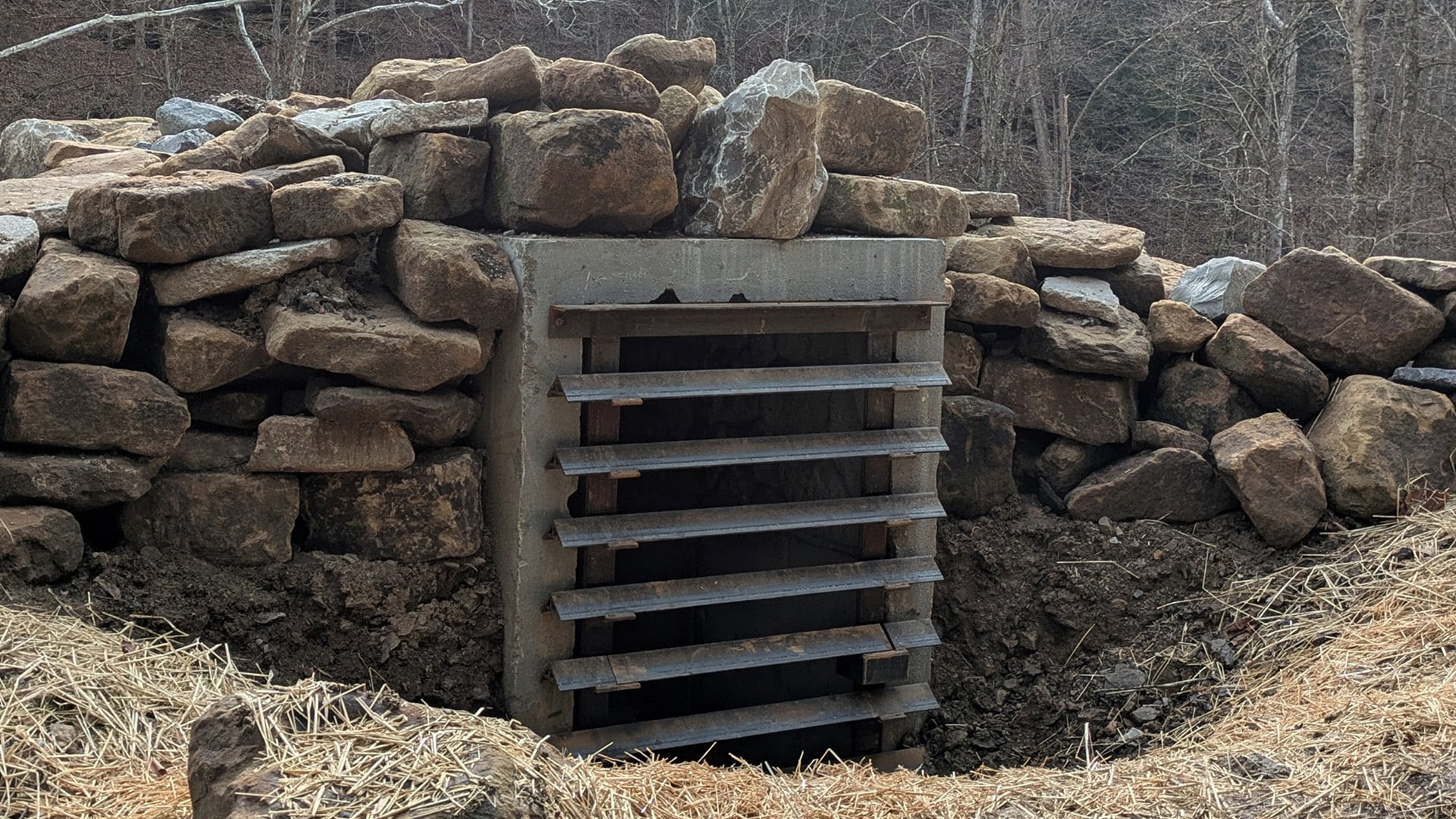
The completed hibernaculum provides threatened and endangered bat species with a place to shelter“The CNX artificial bat hibernaculum is an example of how infrastructure projects can be designed to provide lasting benefits for threatened and endangered species,” concluded Dan. “By identifying habitat requirements early, selecting a site with favorable natural characteristics, adapting the structural concept to real-world constraints, and using pre-cast construction to improve safety and constructability, the project team developed a practical conservation solution for a challenging Appalachian site.”
The project brought together CNX, the U.S. Fish and Wildlife Service, Pennsylvania Game Commission, University of Cincinnati, Bat Conservation International, and more.