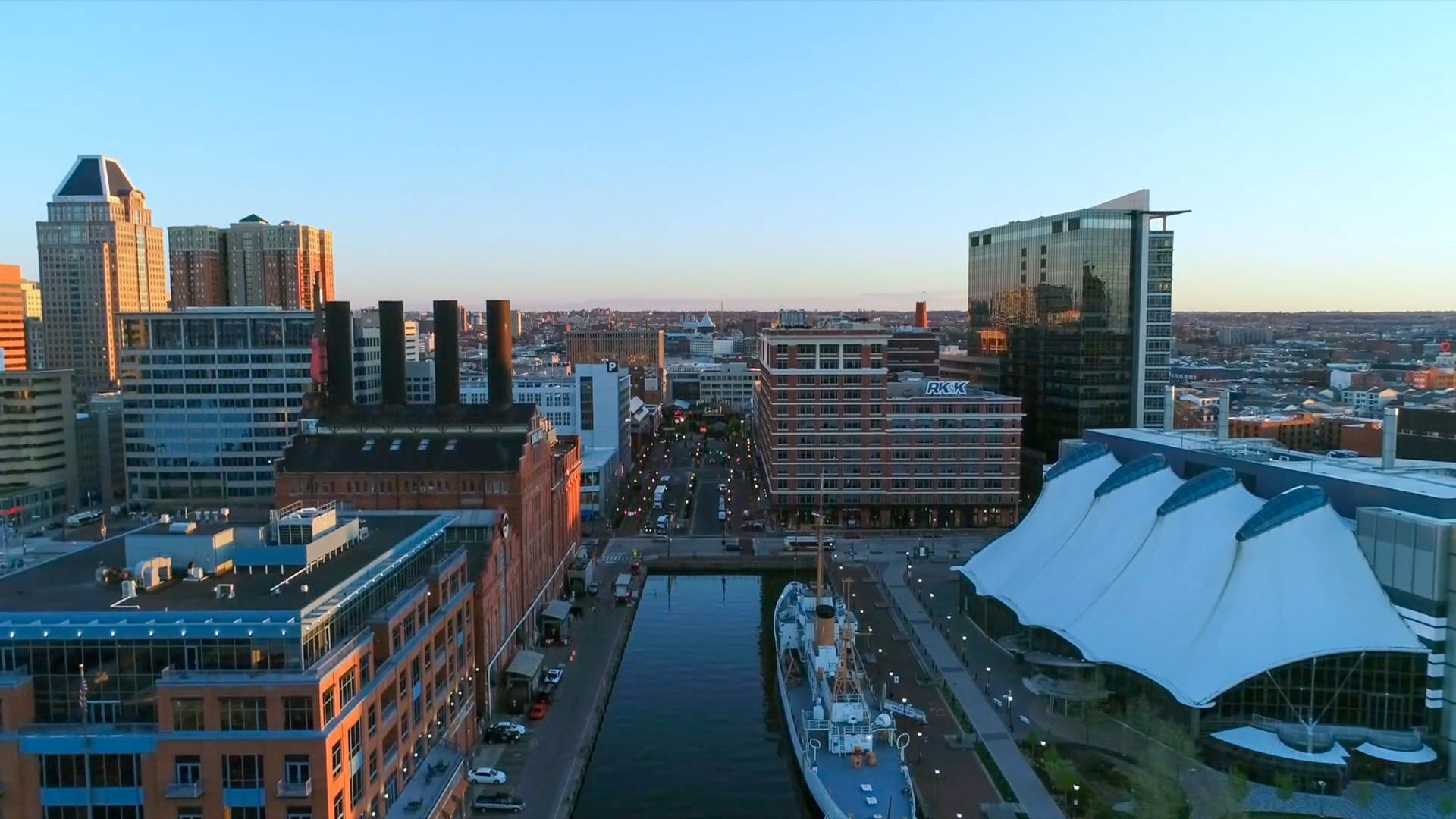

Baltimore’s water system has evolved alongside the city, providing clean water to approximately 1.2 million people. Drawing on more than 35 years of experience, Director John Moore, PE, recently shared the system’s fascinating history and development in a presentation to the Baltimore City Department of Public Works, highlighting the evolution of this crucial water supply infrastructure from source to tap.
“I’ve had the privilege of working on all different aspects of the Baltimore water system, all the way from the drinking water reservoirs, the treatment plants, the distribution system, pumping stations, storage facilities, pretty much source to tap,” he said. “And over these 35-plus years, I really developed an understanding and appreciation for the Baltimore water system, its long history, and how it was developed, and an appreciation of the people that came before us that developed such a great system.”
Today, Baltimore’s water system spans approximately 300 square miles, serves about 1.2 million people in the metropolitan area, and includes three water treatment plants, two finished-water pumping stations, three raw-water pumping stations, and about 33 storage facilities throughout that 300-square-mile service area.
“So it’s a big system and a lot to maintain, and it has a very fascinating history behind it!” said John.
Baltimore’s drinking water system has evolved alongside the city itself. When Baltimore was incorporated in 1727, there was no centralized drinking water system. Residents relied primarily on local springs and lakes for their water supply.
The first initiative to establish a water system began in 1797, driven largely by the need for fire protection. In 1804, the Baltimore Water Company was formed to provide water to portions of the city for both fire protection and drinking. The company developed a system of wells and a dam on the Jones Falls, using wooden pipes to transport water into the city.
By 1810, the city had begun developing public fountains, which became important collection points where residents could obtain drinking water. Meanwhile, the Baltimore Water Company expanded its water delivery and distribution network. The city made several attempts to acquire the company before finally succeeding in 1854. This marked the beginning of Baltimore City’s first municipally owned drinking water system.
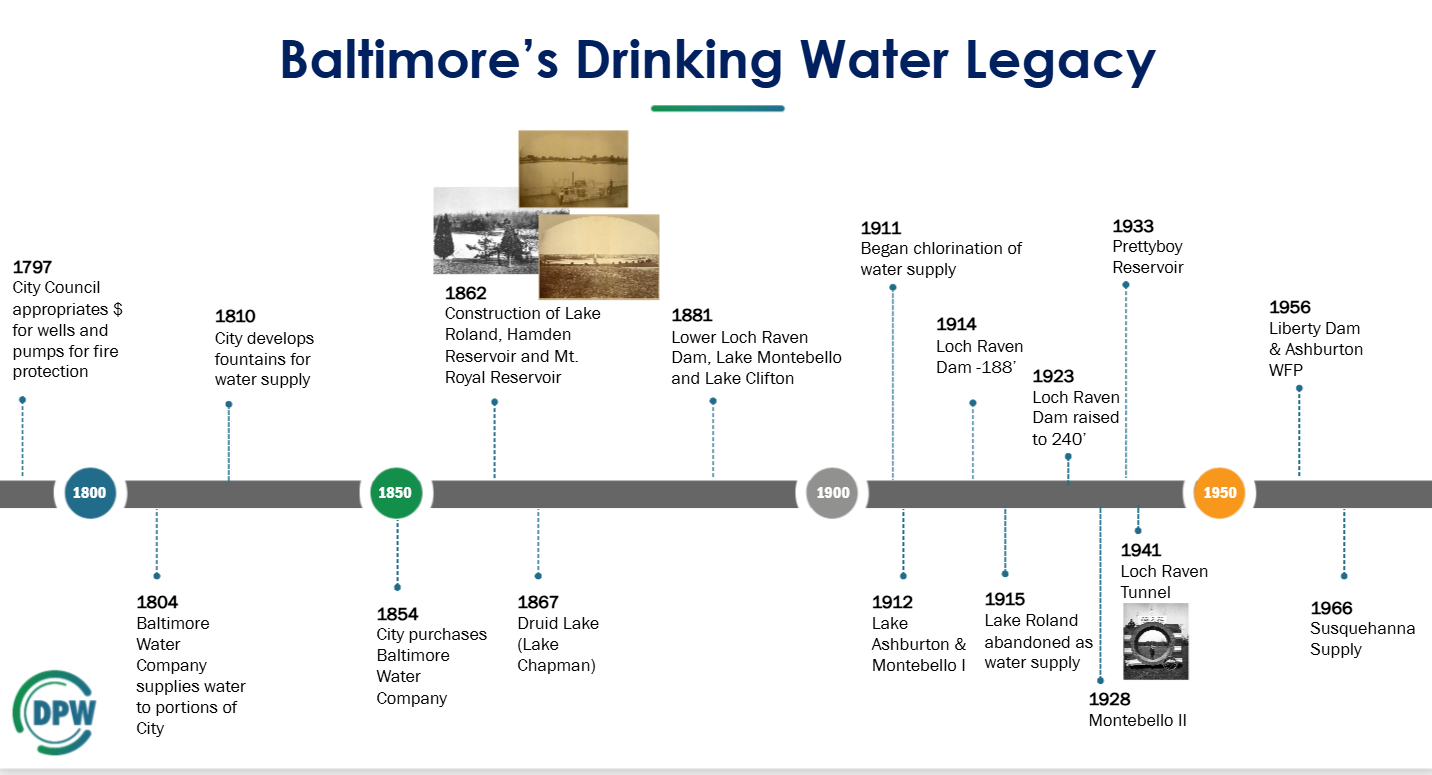
As Baltimore continued to grow, city officials recognized the need for a much larger water supply to serve its expanding urban population. In the 1860s, the city developed the Swann Lake Aqueduct along the Jones Falls. This brick water pipeline carried drinking water from Swann Lake to several open-water reservoirs within the city, helping expand the system’s capacity to meet growing demand.
As Baltimore continued to grow rapidly from the 1860s through the 1880s, the city’s existing water supply from Jones Falls could no longer meet increasing demand. Recognizing the need for a more reliable source, the city turned to the Gunpowder Falls watershed and constructed the Lower Loch Raven Dam in 1881.
Baltimore continued to expand through the 1920s as its population grew and the city incorporated surrounding areas. To accommodate this growth, the municipal water system also had to expand. By the 1930s, the original tunnel constructed through solid rock in the 1880s to convey water from Loch Raven was no longer sufficient. In response, the city built a new tunnel in 1931 to increase the system’s capacity and support its growing water needs.
Baltimore further strengthened its water supply infrastructure in the 1960s with the construction of a 38-mile-long pipeline, measuring 108 inches in diameter, extending to the Susquehanna River. This pipeline provides an additional source of water during periods of drought, allowing the city to pump water from the river to help meet demand when other supplies are strained.
Growth in water demand began to decline in the 1970s and plateaued by the mid-1980s, largely due to the decline of heavy industry and the increased use of more water-efficient appliances. For approximately the past two decades, water demand has declined to levels last seen in the 1960s. Despite the decline in water usage, the cost of maintaining a vast and aging water system continues to increase, resulting in nearly annual increases in water rates simply to maintain the same level of revenue.
Despite the tremendous challenges of maintaining a vast water system, Baltimore’s drinking water system continues to supply some of the highest-quality water to nearly 1.2 million people every day. This is a testament to the many individuals whose commitment and dedication sustain the legacy of the Baltimore water system.
John noted that this is only a small snapshot of three centuries of water system development, but it highlights how critical infrastructure remains essential to ensuring a reliable water supply for generations to come and demonstrates how engineering ingenuity makes systems like this possible.
For more information on the history of Baltimore’s water system, watch John’s full presentation below: