The Project
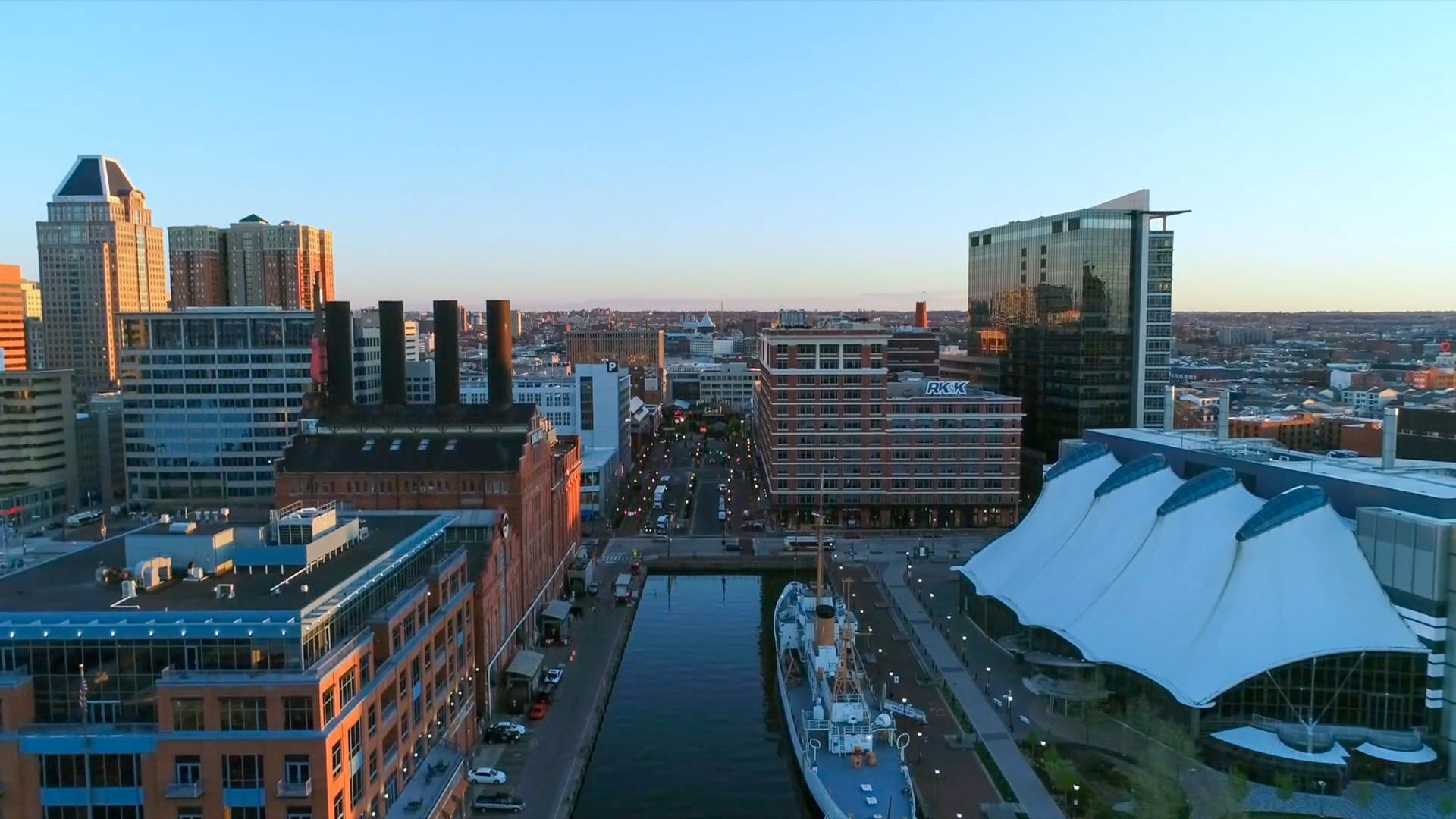
RK&K provided traffic analysis services related to the redevelopment effort within the downtown area, which comprised 21 signalized intersections and multiple arterial corridors including Chestnut Street, Broad Street, Market Street, 4th Street, and MLK Boulevard.
As part of the Broad Street redevelopment effort, RK&K’s objective was to address public realm improvements, multi-modal transportation enhancements, integrate technology, green infrastructure, parking, and economic development opportunities, all while supporting existing businesses and urban residents.
To accommodate these potential amenities within the existing right-of-way, RK&K identified two build alternatives as part of this study, both of which reduced Broad Street’s roadway cross-section from four lanes down to two lanes and added a left turn lane which was expected to have a positive impact on multi-modal operations.
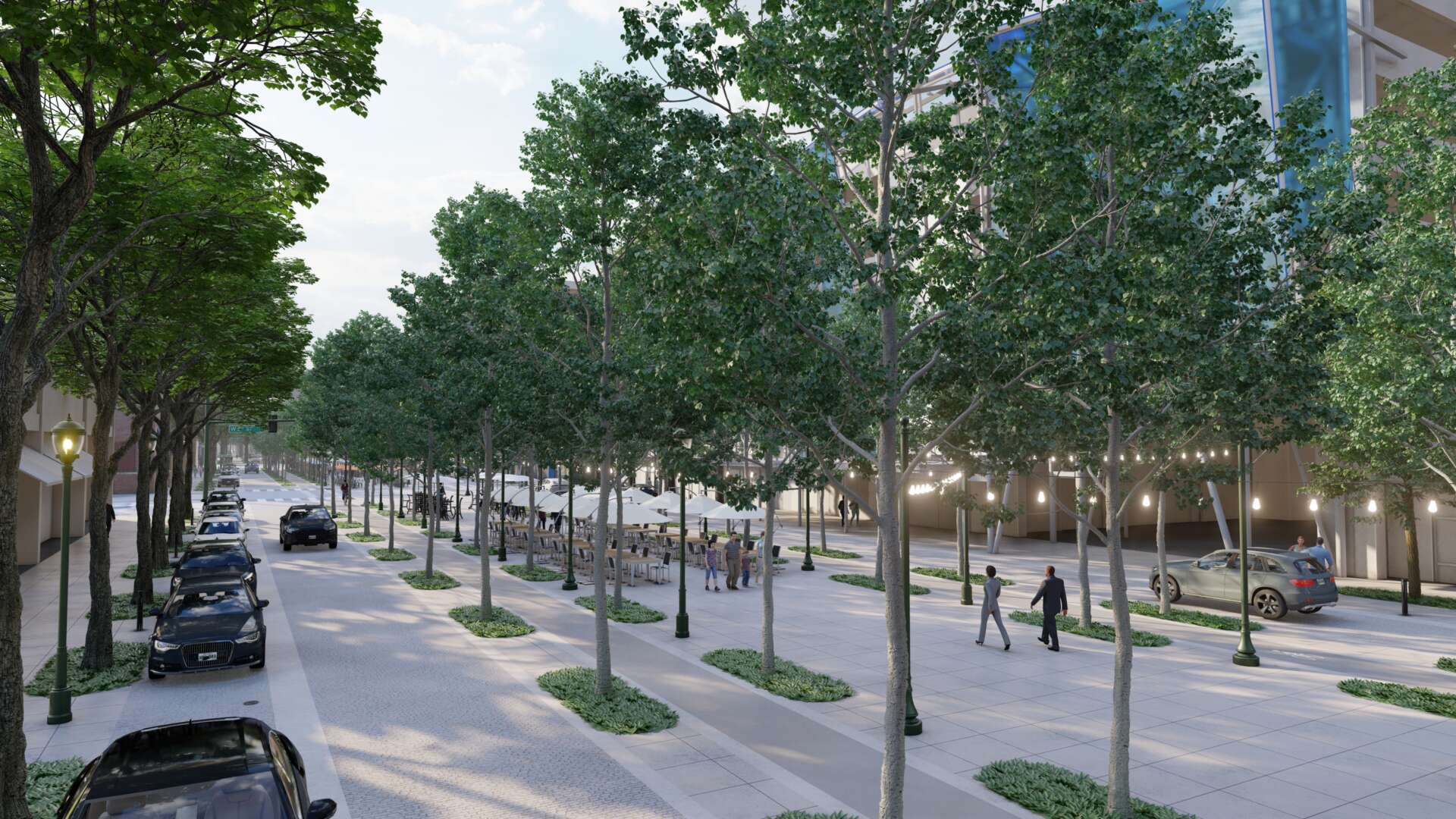
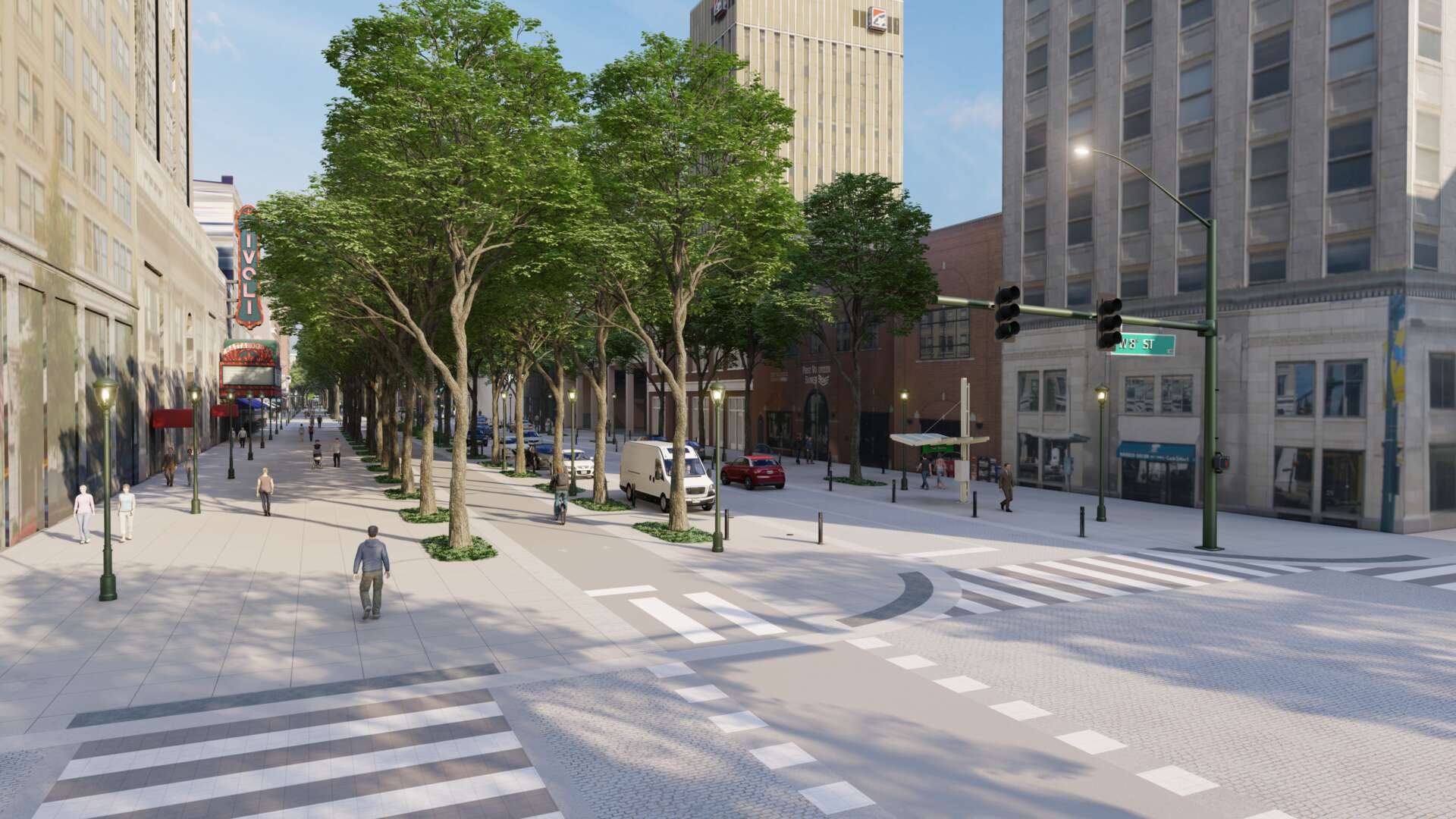
RK&K recommended alternate two to the city which added a right-of-way ultimately providing opportunities to widen the existing sidewalks and bicycle lanes, which was expected to increase safety for pedestrians and bicyclists. Reducing the roadway width also reduces the crossing time for pedestrians and bicyclists, which in addition to improving the experience for non-motorized modes, was beneficial for vulnerable and elderly pedestrians.
Recommendations to accommodate transit through the corridor (routes 4, 28, 33, DTS), included bus bays to improve safety for transit operations while minimizing operational impacts for vehicular modes; and adding marked loading zones to mitigate impacts to vehicular operations to ensure delivery trucks were not encroaching into travel lanes.
RK&K provided traffic analysis services related to the redevelopment effort within the downtown area, which comprised 21 signalized intersections and multiple arterial corridors including Chestnut Street, Broad Street, Market Street, 4th Street, and MLK Boulevard.
As part of the Broad Street redevelopment effort, RK&K’s objective was to address public realm improvements, multi-modal transportation enhancements, integrate technology, green infrastructure, parking, and economic development opportunities, all while supporting existing businesses and urban residents.
To accommodate these potential amenities within the existing right-of-way, RK&K identified two build alternatives as part of this study, both of which reduced Broad Street’s roadway cross-section from four lanes down to two lanes and added a left turn lane which was expected to have a positive impact on multi-modal operations.
RK&K recommended alternate two to the city which added a right-of-way ultimately providing opportunities to widen the existing sidewalks and bicycle lanes, which was expected to increase safety for pedestrians and bicyclists. Reducing the roadway width also reduces the crossing time for pedestrians and bicyclists, which in addition to improving the experience for non-motorized modes, was beneficial for vulnerable and elderly pedestrians.
Recommendations to accommodate transit through the corridor (routes 4, 28, 33, DTS), included bus bays to improve safety for transit operations while minimizing operational impacts for vehicular modes; and adding marked loading zones to mitigate impacts to vehicular operations to ensure delivery trucks were not encroaching into travel lanes.