
The Project
Between 2015 and 2017, the City of Orangeburg experienced extreme flooding during Hurricanes Joaquin, Matthew, and Florence. These three presidentially declared natural disasters resulted in the provision of federal recovery funds to repair and upgrade failing drainage assets to improve the community’s resilience in future flooding events.
Funded through a US Housing and Urban Development (HUD) Community Block Grant – Mitigation (CDBG-MIT), this identified flooding issues, assessed existing stormwater systems, prioritized flood mitigation projects, and established an implementation strategy for the identified projects.
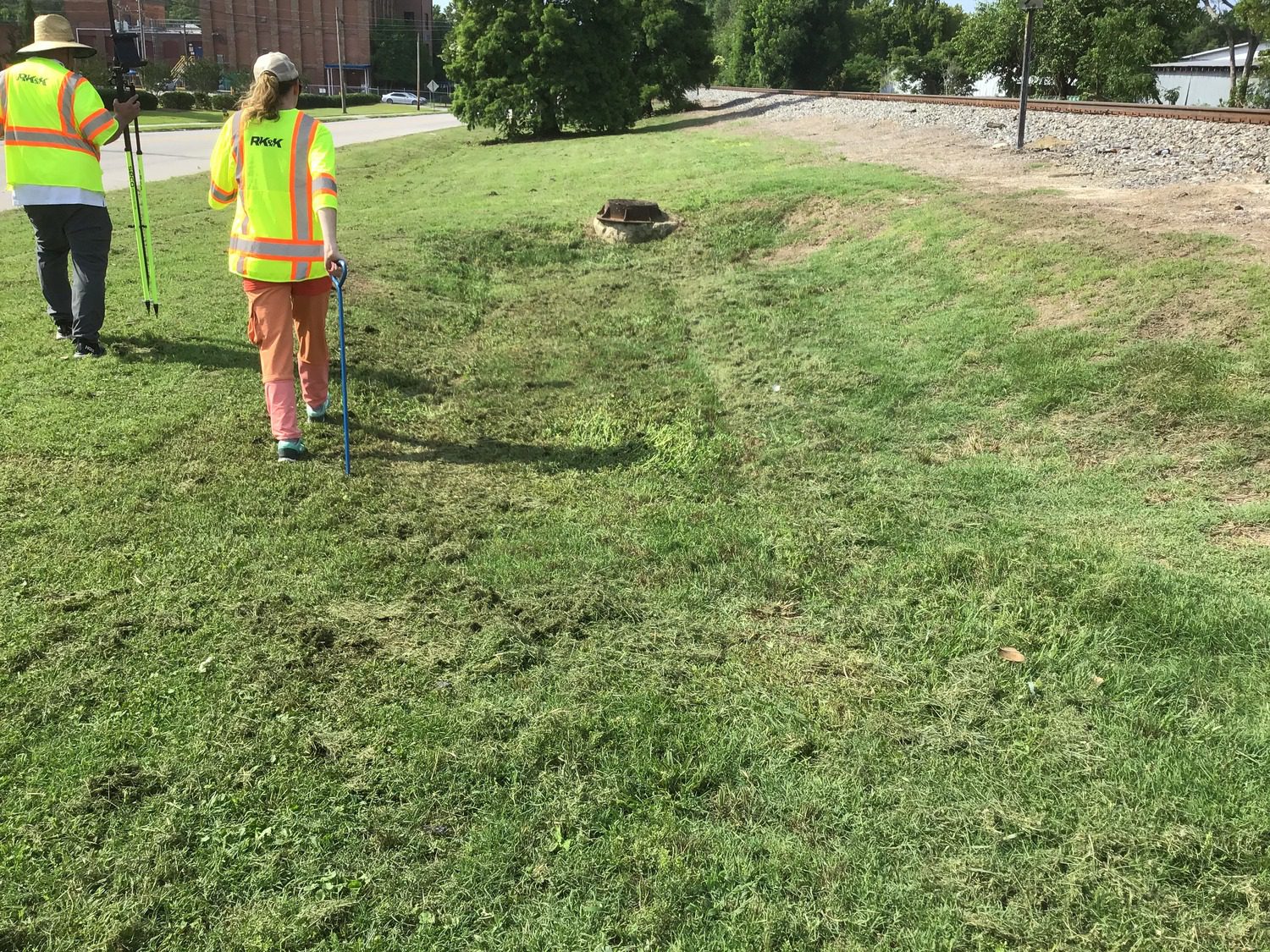
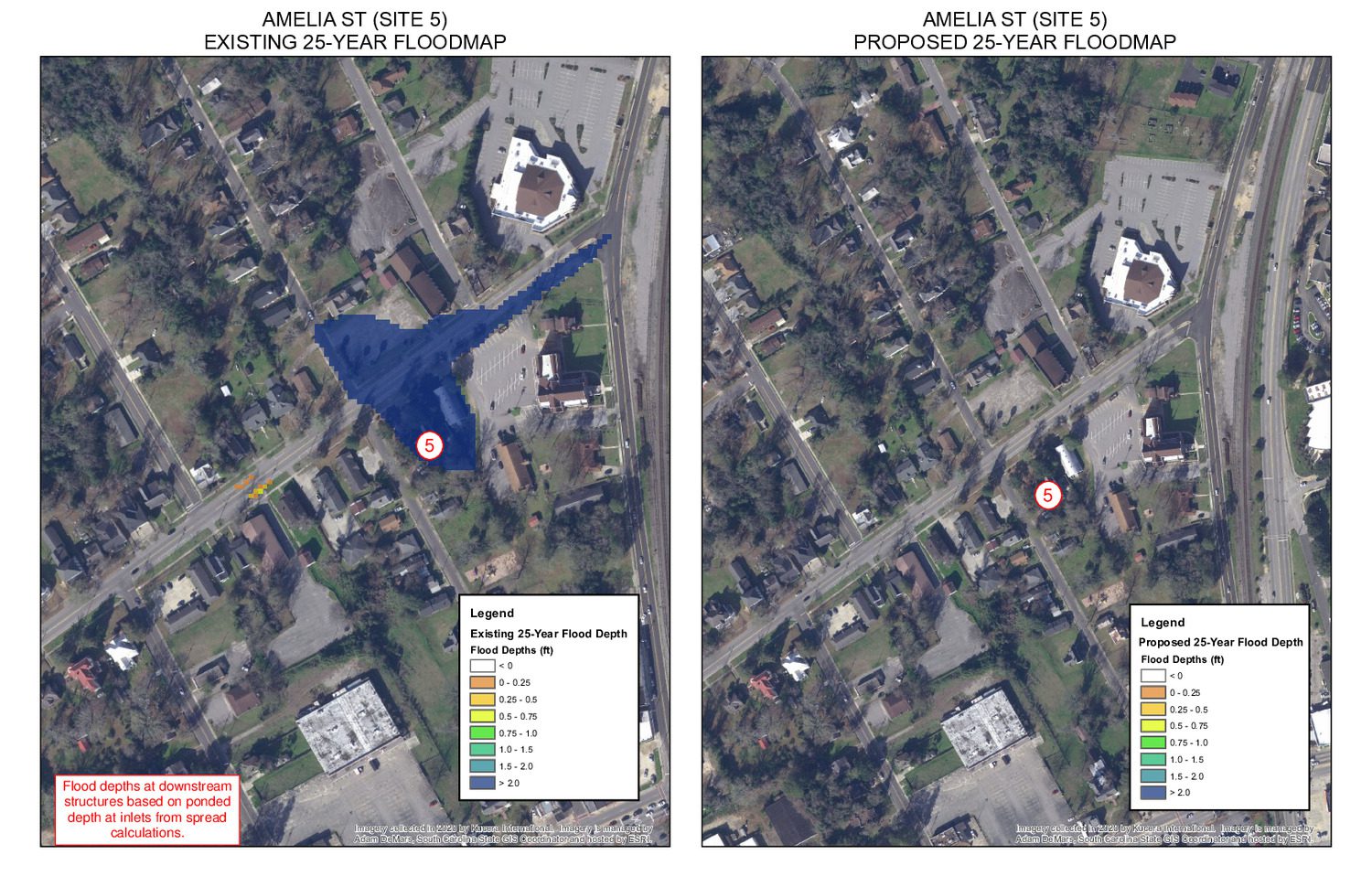
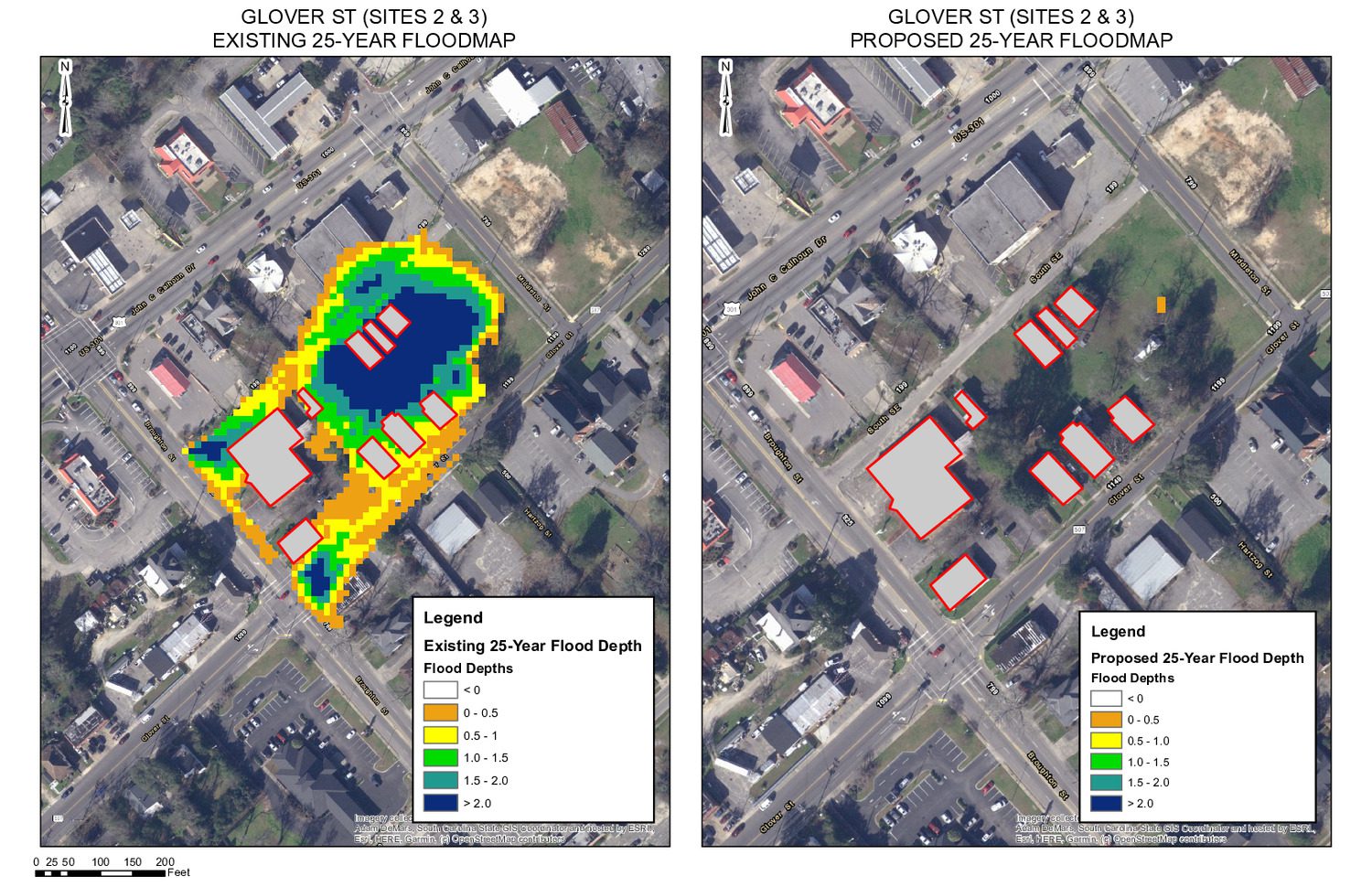
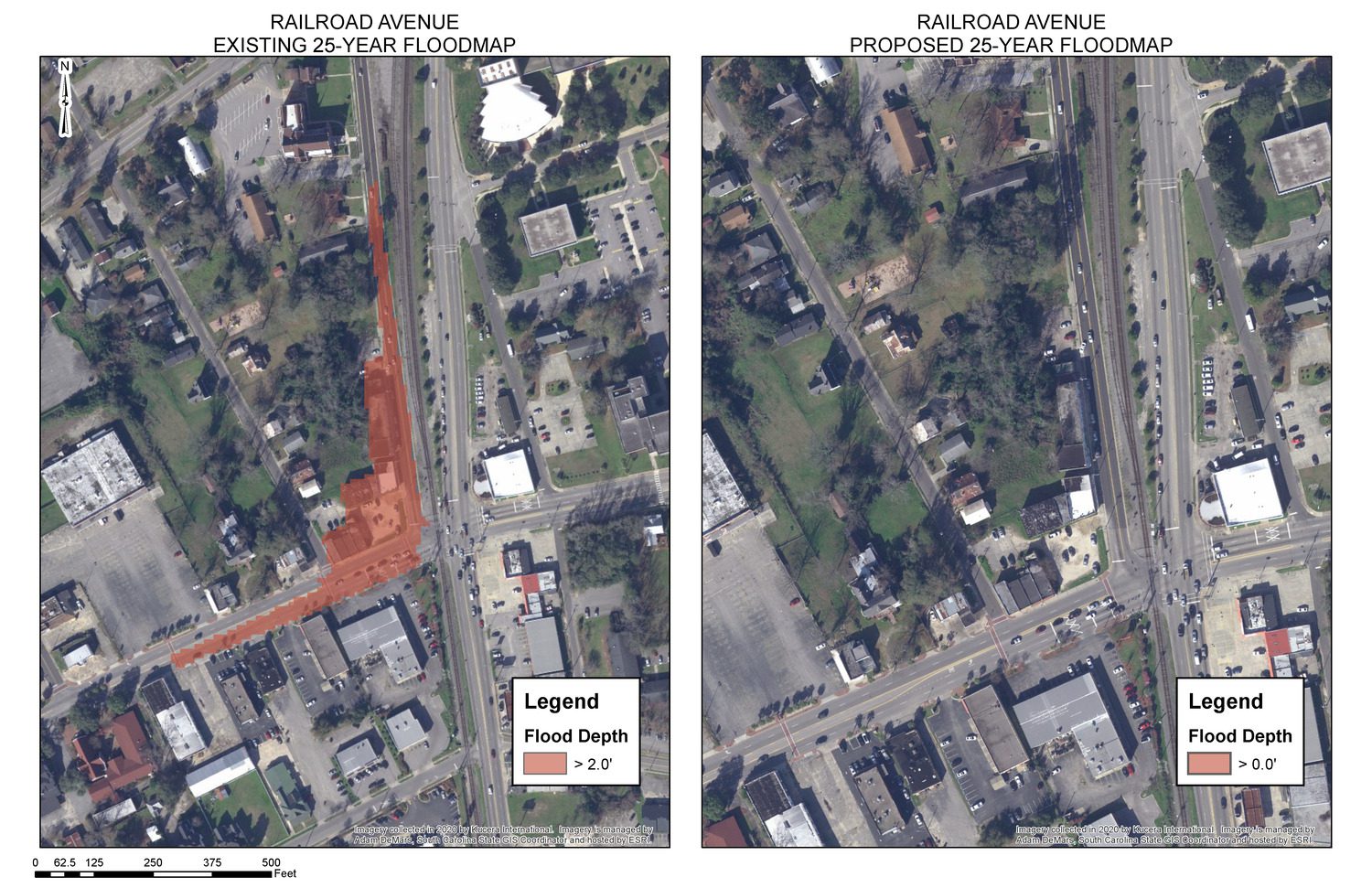
Working as subconsultant to another firm, RK&K gathered data through documentation, field visits, and meetings with City officials and residents to identify flood-prone areas. Using this data, the team performed hydrologic and hydraulic analyses and developed models to identify potential projects. After determining substandard drainage systems, our team designed solutions with alternatives to incorporate in the Benefit-Cost Analysis (BCA). We then applied Social Vulnerability Index (SoVI) considerations associated with Low-to-Moderate Income (LMI) communities to determine which projects fell within the LMI areas. Using this refined list, the team’s environmental justice specialist determined each project’s ability to relieve flooding in LMI Communities and ranked the projects according to CDBG-MIT funding requirements. The final report provided SCOR and the City with a ranked listing of implementable flood mitigation solutions.
Between 2015 and 2017, the City of Orangeburg experienced extreme flooding during Hurricanes Joaquin, Matthew, and Florence. These three presidentially declared natural disasters resulted in the provision of federal recovery funds to repair and upgrade failing drainage assets to improve the community’s resilience in future flooding events.
Funded through a US Housing and Urban Development (HUD) Community Block Grant – Mitigation (CDBG-MIT), this identified flooding issues, assessed existing stormwater systems, prioritized flood mitigation projects, and established an implementation strategy for the identified projects.
Working as subconsultant to another firm, RK&K gathered data through documentation, field visits, and meetings with City officials and residents to identify flood-prone areas. Using this data, the team performed hydrologic and hydraulic analyses and developed models to identify potential projects. After determining substandard drainage systems, our team designed solutions with alternatives to incorporate in the Benefit-Cost Analysis (BCA). We then applied Social Vulnerability Index (SoVI) considerations associated with Low-to-Moderate Income (LMI) communities to determine which projects fell within the LMI areas. Using this refined list, the team’s environmental justice specialist determined each project’s ability to relieve flooding in LMI Communities and ranked the projects according to CDBG-MIT funding requirements. The final report provided SCOR and the City with a ranked listing of implementable flood mitigation solutions.